
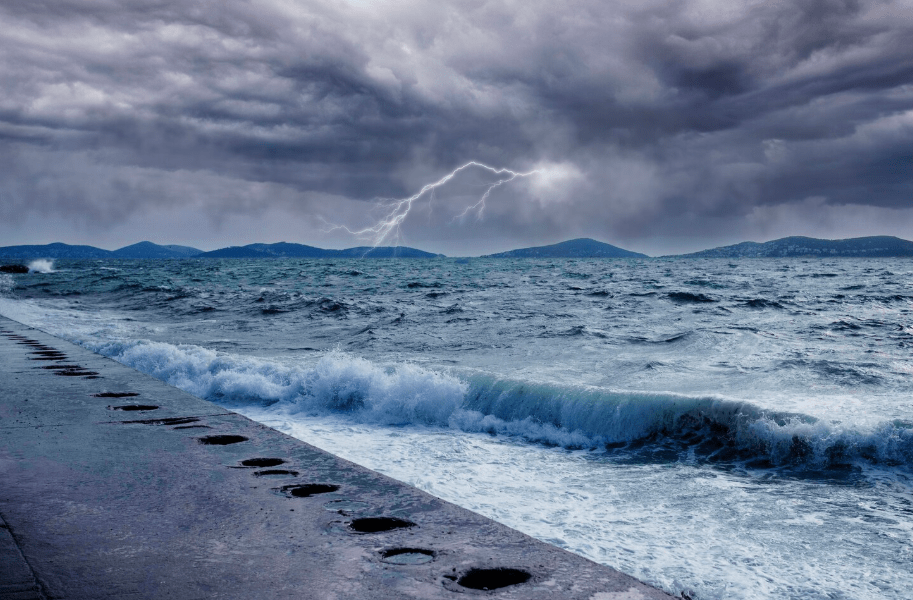
On the morning of Hurricane Melissa’s arrival, the sea surrounding western Jamaica did not appear particularly noteworthy. The water remained that unthinkable, deep blue that tourists take pictures of without considering what’s underneath. However, the island found itself in the direct line of one of the most powerful Atlantic hurricanes ever recorded by the early afternoon of October 28, 2025.
Post-season analysis upgraded Hurricane Melissa to sustained winds of 190 mph, according to the National Hurricane Center. It shares the record for the strongest maximum sustained winds in the history of the Atlantic basin with Hurricane Allen in 1980. Clinical records are kept. On the ground, the experience was anything but.
Storm Overview & Key Information
| Category | Details |
|---|---|
| Storm Name | Hurricane Melissa |
| Peak Intensity | 190 mph (165 knots) |
| Minimum Central Pressure | 892 mb |
| Landfall | October 28, 2025 – Western Jamaica |
| Fatalities | 95 across the Caribbean |
| Governing Authority | National Hurricane Center |
| Category at Landfall | Category 5 |
| Official Report | https://www.nhc.noaa.gov/data/tcr/AL132025_Melissa.pdf |
Locals in Black River were the first to describe the sound. Windows shook in response to a low, metallic howl that grew louder before the glass gave way. Like lids, roofs peeled back. The utility poles broke. Wind at that speed is unnerving because it erases rather than pushes.
Melissa was officially classified as a Category 5 storm when it made landfall. After being framed in the context of the upgraded peak intensity, the final report confirmed a minimum central pressure of 892 millibars and landfall winds that were initially estimated at 185 mph. For meteorologists, those numerical revisions might be the most important. However, they also influence how history will perceive the worst day in decades for Jamaica.
There were 95 fatalities in Cuba, Haiti, the Dominican Republic, and Jamaica. Of those fatalities, 45 took place in Jamaica. Repetition of numbers in headlines risks reducing individual stories to statistics. Days after the storm, families in the parish of St. Elizabeth rummaged through mud-stained rooms, lifting wet mattresses and looking for anything that could be salvaged, including documents and photos.
It was not a storm that passed quickly. Melissa persisted for about 30 hours before landfall, remaining at Category 5 intensity. That slow turn toward the island to the north created a new kind of dread. Time itself seemed to be dragging as radar loops were viewed that week.
The attack was not limited to the winds. Along portions of the southern coast, storm surges ranging from seven to eleven feet were forced inland. Over thirty-two inches of rain fell in Knock Patrick. Roads were completely engulfed by landslides, which transformed them into brown rivers. Farmers lost livestock, with over a million animals reportedly dying, adding to the already growing economic damage.
Whether the financial recovery will coincide with the government’s optimistic two- to three-year projections is still up in the air. Repairs to infrastructure take time. Perception is just as important as reality when it comes to tourism, which is the island’s main source of income. Bookings have already started to increase, indicating that investors think Jamaica’s tenacity will win out. However, resilience can also be a polite way of saying “necessity.”
Melissa’s meteorology resume resembles a record checklist. 165 knots at its highest. One of the lowest landfall pressures ever observed in the Atlantic. According to reports, a dropsonde measured an instantaneous wind of 219 knots, breaking previous world records. These metrics help scientists better understand how storms behave in an era where oceans are warming.
The science seems unimportant to the locals.
In the weeks following the storm, a coastal community’s roofs were covered with tarps, fishing boats were overturned like toys, and kids were back in their school uniforms despite the damaged classrooms. Some homes recovered quickly, while others are still awaiting government assistance or insurance evaluations.
The increase to 190 mph seems to change more than just hurricane record book bragging rights. It reframes conversations about readiness. Melissa will be mentioned by emergency managers in subsequent briefings. It will be taken into account when calculating risk in insurance models. Climate scientists will examine its slow, punishing trajectory, sustained peak strength, and quick intensification.
Melissa might serve as a new standard for what the Caribbean might experience more regularly. In recent decades, rapid intensification—storms that dramatically increase in strength within a brief period of time—has become more frequent. These explosions are fueled by warm sea surface temperatures, which makes forecasting more difficult and evacuation schedules more difficult.
Nevertheless, the island was unable to completely protect itself despite the advance warnings. Over 25,000 individuals sought refuge. Up to 77% of Jamaica lost power at one point. Families were left waiting for updates and hoping that loved ones were safe as communication networks came and went.
It is evident from observing this that record-breaking storms produce two distinct stories. One can be found in government reports and scientific journals. The sound of generators humming through long nights, the way doors rattled, and the saltwater odor that lingered for days are all reminders of the other.
In Atlantic history, Hurricane Melissa will always hold a special place. But history isn’t concrete. Rebuilding permits, reopened schools, and replanted fields are all ongoing stories in western Jamaica.
Beneath the debris, one can’t help but notice the silent resolve. Houses are starting to rise once more. Boats are being fixed. Life continues, erratic but unrelenting.
190 mph is now listed next to Melissa’s name in the Atlantic record books. On the island, the question that haunts every hurricane season—will Melissa’s lessons be sufficient when the next storm forms—feels more significant than the numbers.