
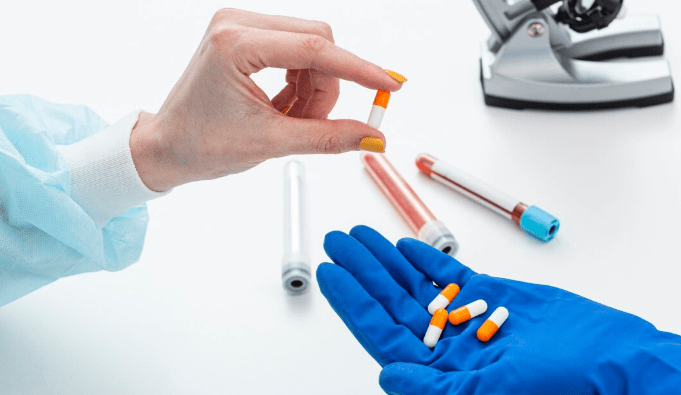
When the preliminary results of a clinical trial are positive, a certain amount of tension arises. Not encouraging but cautious, not promising but complicated, but truly, quantifiably good. With data from a Phase 1 trial that decreased a crucial disease-linked protein by almost 60% in human patients without causing significant side effects, the Parkinson’s research community is currently in a similar situation. The medication is known as BIIB094. The majority of people are unaware of it. That might be about to change.
Approximately 10 million people worldwide suffer from Parkinson’s disease. The choices for the majority of them haven’t changed significantly in decades: control the tremors, control the stiffness, and, if feasible, postpone the decline. There isn’t a treatment that genuinely slows the disease’s biological progression. BIIB094 is trying a different approach. It’s an antisense oligonucleotide, or ASO, which is a kind of molecule intended to stop a gene from producing its harmful protein. The most frequently mutated gene in hereditary Parkinson’s disease, LRRK2, is the target here. The goal is not to hide symptoms. The goal is to silence the source of the issue by moving upstream.
Experimental Drugs: Clinical Overview
| Also known as | Investigational drug / IND / Investigational New Drug |
| Regulatory authority | U.S. Food and Drug Administration (FDA) |
| Notable drug in trials | BIIB094 — targets LRRK2 protein (Parkinson’s disease) |
| Trial type (BIIB094) | Phase 1 — randomized, placebo-controlled, multicenter |
| Participants enrolled | 82 participants with Parkinson’s disease |
| Key result | LRRK2 protein was reduced by up to 59% in treated patients |
| Osteoarthritis research | UC Boulder — single injection reverses OA in animal models within weeks |
| Published in | Nature Medicine (2026) — DOI: 10.1038/s41591-026-04262-4 |
| Reference | NCI Dictionary of Cancer Terms — Experimental Drug ↗ |
The study, which was just published in Nature Medicine, was co-authored by Danielle Larson, a movement disorders specialist at Northwestern University’s Davee Department of Neurology. “This was a multicenter clinical trial looking at an antisense oligonucleotide therapy for LRRK2-specific Parkinson’s disease,” she said. The primary objective was straightforward and practical: determine whether it is safe. It was purposefully postponed to see if it could truly alter the course of illness. It’s harder to find scientific patience like that.
Over the course of the two trial segments, 82 participants were enrolled. A single dose was given to some, while four doses spaced roughly one month apart were given to others. The medication was administered intrathecally, or directly into the cerebrospinal fluid through lumbar puncture. This is a known but difficult procedure. Most side effects were mild to moderate, and most importantly, there were no reports of serious adverse events associated with BIIB094. Cerebrospinal fluid levels of LRRK2 protein decreased by up to 59% in treated individuals. By all accounts, that is a substantial decrease.
The fact that these decreases occurred whether or not patients had a known LRRK2 genetic mutation is intriguing and possibly more significant than it might initially seem. This is significant because individuals with that particular variant are not the only ones affected by Parkinson’s. There is no known genetic cause for the disease in the majority of affected individuals. If patients with that mutation are not the only ones who benefit from BIIB094, the treatment may eventually apply to a much larger population than first thought. It’s the kind of detail that scientists often overlook, but it’s still unclear how far that observation will hold at scale.
It’s important to acknowledge the shortcomings of this trial. It was not intended to indicate whether patients would have improved mobility, improved cognitive function, or a slower rate of disease progression. Larger, longer studies—a Phase 2 trial centered on efficacy, measuring motor function and disease rating scales rather than just protein levels—will be necessary to answer those questions. The biology is promising. It remains to be shown whether that biology results in people feeling significantly better. That kind of measured honesty from a researcher is, oddly enough, more comforting than breathless optimism, as Larson herself stated.
In the meantime, a different story about experimental drugs is developing in an entirely different area of medicine. In just a few weeks, researchers at the University of Colorado Boulder have created a slow-release drug delivery system that, when injected into a damaged joint, can induce the body’s own cartilage and bone cells to perform something akin to a repair job in animal models. Hundreds of millions of people worldwide suffer from osteoarthritis. As of right now, there is no treatment. The joint eventually deteriorates to the point where the only viable treatment is replacement surgery, which is costly, challenging, and not long-lasting. “At the moment, the options for many patients are either a massive, expensive surgery or nothing,” stated UC Anschutz orthopedics chair and professor Evalina Burger. “There’s not a lot in between.”
Human trials have not yet started, and this osteoarthritis research has not yet undergone peer review. Before that can occur, the team is entering a second stage of animal research that focuses on toxicology and safety. It will still require time. However, the underlying idea—a single injection that uses the body’s own cells to heal itself—sounds almost too good to be true, which is precisely why researchers are proceeding cautiously.
What unites these two tales is something that is sometimes overlooked: a methodical, slow willingness to stick with a challenging issue long enough to solve it. According to Larson, the Parkinson’s trial opens the door for additional ASO-based treatments that target distinct biological pathways. According to the Boulder team, the arthritis work is an example of the kind of moonshot that requires two years to go from concept to animal model. Neither result is guaranteed. Both are examples of sincere scientific endeavors carrying out their intended purpose, which is to construct, brick by brick, something that could one day have a significant impact on suffering individuals.
Observing these experimental medications go through the pipeline gives me the impression that medicine is gradually gathering enough components to begin addressing issues that it previously only handled. The results of the following round of trials will determine whether or not that feeling persists. The data is what it is for the time being, and it doesn’t let us down.