
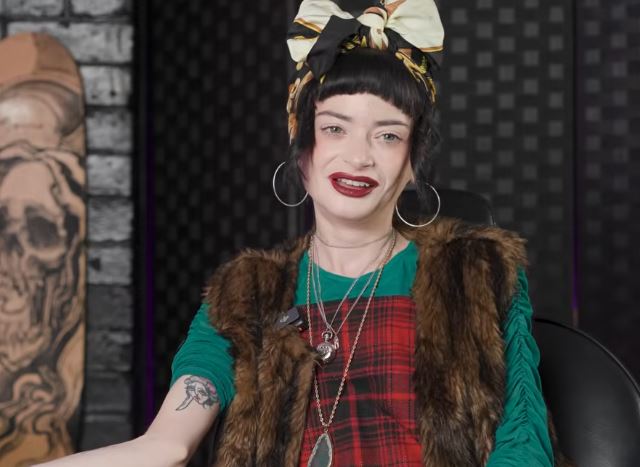
Because Ruth Codd’s story combines humor, pain, and fierce resilience in a way that is both relatable and incredibly effective, discussions about her injury have been buzzing with the same intensity as a swarm of bees changing direction in recent days. Years of her life were shaped by the injury, which started at age 15 during a school football game she never really enjoyed. She fell awkwardly, broke her leg, and what should have been an inconvenient teenage mishap turned into a long-term medical saga that altered everything she expected her future to be.
| Field | Detail |
|---|---|
| Name | Ruth Codd |
| Date of Birth | 13 June 1996 |
| Age | 29 |
| Birthplace | Wexford, Ireland |
| Nationality | Irish |
| Profession | Actress, former make-up artist and barber |
| Known For | The Midnight Club, The Fall of the House of Usher, How to Train Your Dragon, The Celebrity Traitors |
| Key Injury | Football injury at age 15 leading to long-term complications |
| Major Surgeries | Right leg amputated below knee at 23; left leg amputated below knee at 29 |
| Disability | Bilateral below-knee amputee |
| Career Breakthrough | Gained fame on TikTok, discovered and cast in Netflix’s The Midnight Club |
| Recent Highlight | Contestant on The Celebrity Traitors; rising visibility for disabled performers |
The break never healed as the medical professionals had hoped. Instead, it set off a series of complications, including bone instability, nerve problems, skin breakdown, and persistently infected wounds that made even routine tasks seem abnormally challenging. The slow accumulation of setbacks that followed, rather than the drama of the initial accident, is what makes this journey remarkably similar to many chronic injury stories. There were a ton of appointments. Therapies were tried and then dropped. Promises of progress were frequently made, but they were rarely fulfilled. She cycled through physiotherapy rooms, hospitals, and waiting areas for eight long years, which must have worn down even the strongest of souls.
She uses a deft blend of candor and lightness when discussing this time. She makes jokes about “messing around at school” and how she would have rather hurt herself doing something she truly enjoyed. That sense of humor turned into an incredibly useful coping mechanism, particularly during times when medical procedures seemed never-ending. Surgery came and went. Splints were fitted, removed, replaced. A heavy external cage surrounded her leg for a long stretch of time, becoming both a medical tool and a visual reminder of the fragility she was carrying. Additionally, she became much less independent and mobile as the years went by.
She was nearly always using crutches by the time she was in her early twenties. She always walked a little higher on her toes to avoid pressure, which eventually caused damage to the joints in her remaining foot. She has talked about how she felt like life was passing by quickly without her and how she was afraid of falling behind as other people pursued their careers, education, and relationships. Her subsequent decisions feel even more grounded as a result of these incredibly honest and sincere admissions. In actuality, she persisted in battling for a limb that medication was unable to save.
She made a brave and especially good decision for her long-term health at the age of 23, following eight years of crippling pain and restricted mobility. She decided to have her right leg amputated below the knee. Some people might imagine this decision as overwhelmingly bleak, but she has consistently described it as liberating. She was able to walk with a prosthetic in a matter of days after the ongoing pain subsided, which must have felt much quicker than anything she had gone through since adolescence. She claimed that both emotionally and physically, it felt like a weight had been lifted.
She found herself at home with unanticipated free time during the pandemic after losing her job as a barber. What she did next changed her life. She started sharing videos on TikTok, which were occasionally lighthearted, occasionally darkly humorous, and frequently addressed disability with a genuineness that was remarkably adaptable. She discussed crutches, prosthetics, and the strange questions people pose to people with disabilities. Her audience quickly expanded as a result of her candor. She developed a fan base in a matter of months, which eventually attracted the interest of casting agencies.
One of those tales that almost seems like a movie is her journey from TikTok creator to Netflix actress. Her natural charisma caught the attention of a casting director who saw her online and asked her to try out. She landed the role of Anya in The Midnight Club without having attended drama school. In part because she infused the character’s experiences with her own, her performance received accolades for its emotional depth and realism. She depicted vulnerability without fragility, humor without forced optimism, and pain without self-pity. In a cast full of seasoned actors, those attributes helped her stand out.
She was then cast once more in The Fall of the House of Usher, this time in a non-disability-focused role, demonstrating how remarkably effective representation can be when actors are given the opportunity to go beyond their injury narratives. She transitioned from horror to drama to reality competition, demonstrating her remarkable versatility. With each project, she chipped away at outdated stereotypes about disabled performers, showing that talent is not diminished by limb difference.
But the first amputation was not the end of the injury tale. After years of using crutches, her left foot became overused and structurally compromised, and it started to deteriorate. In 2021, she lost every toe. She continued to work, taking on more challenging roles, filming significant projects, and attending red carpet events. But the problems with her left foot continued. Eventually, the doctors explained that it was beyond repair. She could continue to patch it up, but it would still lower her quality of life.
Then she made the decision that she recently made public: at the age of 29, she had a second below-knee amputation. She made the announcement by introducing her new wheelchair, Fat Tony, to her fans in a TikTok video shot from her parents’ house, showcasing the humor that characterizes her approach to adversity. The combination of warmth and directness that has made her voice so captivating was encapsulated in the caption, “No legs, who dis?” Even though she acknowledged that there was “a lot to unpack,” her tone remained upbeat, as though she were guiding her audience through the process with comforting clarity.
According to her, having two prosthetics might allow her greater freedom than having just one damaged foot. That belief is not naive; it is based on experience and bolstered by incredibly resilient advancements in prosthetic technology. Like her first choice, this one was both pragmatic and progressive. It was about moving forward with fewer barriers and more opportunities, not about giving up.
Her narrative also touches on a broader cultural change in the representation of disability on screen. Her presence has demonstrated that disabled actors bring depth, credibility, and especially creative perspectives to their roles, and audiences have grown more sensitive to authenticity. With her career now expanding into film franchises and high-profile series, she stands as proof that inclusion is not charity; it is artistic evolution.
On paper, her story—from injury to amputation, TikTok, Netflix, and another amputation—sounds dramatic, but in person, she delivers it in a steady, convincing, and grounded manner. She describes acceptance as a gradual process rather than a single epiphany. She admits that she experienced grief, anger, and fear before describing how those feelings progressively transformed into something stronger.
She anticipates feeling unstoppable in the upcoming years with two prosthetics and significantly less pain. That self-assurance is infectious. It promotes the notion that reinvention is not only feasible but also occasionally required, and that loss can occasionally serve as a gateway. Her path may have been shaped by her injury, but the results are still being shaped by her decisions and sense of humor.