
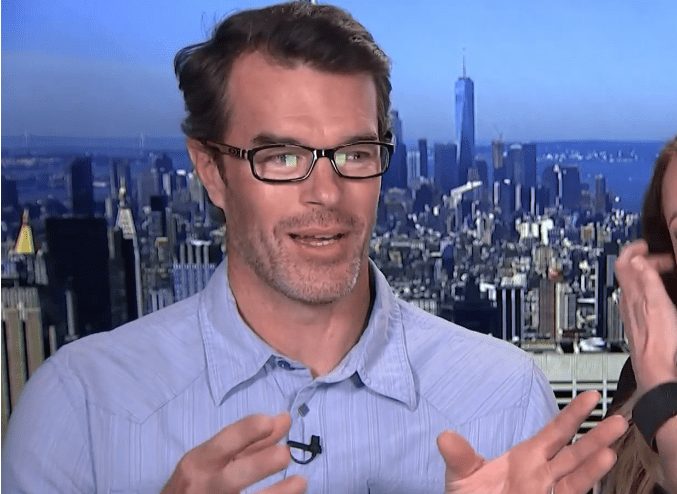
Credit: Access Hollywood
Illnesses that don’t show any symptoms are especially cruel. The arm is not in a cast. No visible injuries. A person who once leaped up stairs and carried people out of burning buildings is now sitting on the edge of a bed at noon, unsure of how they will survive the next few hours. That was Ryan Sutter’s reality for the better part of six years—a period of agony that put not only his physical health to the test but also his sense of self, the potential of his marriage, and the limits of what a person can withstand before something fundamental changes.
The 51-year-old Sutter rose to fame in 2003 after making an appearance on the first season of The Bachelorette. He eventually wed Trista Rehn in a televised wedding that attracted an estimated 26 million viewers. It was the kind of love story that seldom appears on reality TV: one that genuinely endured, developed into a family, and settled into something commonplace and genuine in a Colorado home with two teenagers and twenty years of shared life. This is one of the reasons his illness was so confusing to witness from the outside when it eventually manifested.
| Personal Profile Card | Values |
|---|---|
| Full Name | Ryan Sutter |
| Age | 51 (as of 2026) |
| Known For | Finalist on Season 1 of The Bachelorette (2003); married Trista Rehn |
| Profession | Firefighter; television personality |
| Spouse | Trista Sutter (married 2003) |
| Children | Son Maxwell (17), Daughter Blakesley (15) |
| Illness | Lyme Disease (tick-borne bacterial infection) |
| Diagnosis Year | 2020 (after approximately one year of undiagnosed symptoms) |
| Current Status | Significantly improved; describes most days as “good.” |
| Residence | Colorado, USA |
| Reference Website | People Magazine — Ryan Sutter Lyme Disease |
Before being diagnosed in 2020, Sutter struggled with symptoms that didn’t add up to anything clear for about a year. For no apparent reason, his body would itch. Severe headaches were intermittent. Then there is the fatigue, which is different, heavier, and more debilitating than the kind that comes after a demanding shift at the fire station. He put it simply as “beyond tired,” and anyone who has dealt with chronic fatigue at that level will understand what he meant right away. It’s the kind of tiredness that doesn’t react to sleep, sits in the bones and won’t go away, and makes navigating the simple structure of a typical day feel like a maze.
One of the most disputed diagnoses in contemporary medicine is Lyme disease, which is brought on by bacteria spread by tick bites. With a typical course of antibiotics, some patients recover completely and never look back. Then there are individuals like Sutter, for whom the infection appears to persist in some way, causing symptoms that physicians occasionally find difficult to measure and that the medical community as a whole has debated for years.
In clinical circles, the term “chronic Lyme” is unsettling because it raises concerns about diagnosis, treatment, and the discrepancy between what patients actually experience and what standard tests consistently reveal. It turns out that Sutter’s year-long quest for answers before receiving a diagnosis for his illness is perfectly typical of that experience.
Two years after learning what he had, in 2022, he was still having enough difficulty to share his struggles on Instagram. He talked about the number of messages he had received from people in similar circumstances and the weight of realizing how many people were suffering in ways that were hidden from the public. He seemed to care about that public admission and the community it exposed in a way that extended beyond his own healing. At the time, he claimed to have learned about suffering “in numbers that don’t seem possible.” When you take into account who said it, a man who had spent years running toward fires, physically strong and professionally trained for emergencies, finds himself leveled by an invisible force.
Sutter’s statement about realizing for the first time why people with chronic illnesses occasionally lose the will to live is the most difficult thing he has revealed and the one that has elicited the greatest reaction. He was cautious in how he presented it; he has stated that he was never suicidal, but the weariness and feeling of being a never-ending burden drove him to a point where the reasoning behind it made sense to him.
Public figures are still comparatively uncommon in their candor about chronic illness, and there’s a sense that it matters more than it may appear. Millions of people who suffer from illnesses that have no clear end, no finish line, and no treatment are aware of that darkness. It’s not insignificant to have someone with a public platform call it out.
As of early 2026, the situation has significantly improved. In early 2025, Trista described him as “about 80 percent,” which is both encouraging and illuminating. The remaining 20 percent, the unpredictable bad days that still occur, and the uncertainty of whether a particular period of fatigue is due to Lyme resurfacing or a common illness are all part of the daily calculation. With an attention to physical detail that most healthy people never need to acquire, Ryan has talked about learning to read the early warning signs in his own body, modifying activity levels, staying hydrated, managing supplements, and pacing himself. Whether a person wants it or not, chronic illness tends to force this kind of self-awareness.
It’s difficult not to find something educational in this story’s larger form, not only for Sutter personally but also for what it says about how society views invisible illness, how long it can take to receive a diagnosis, and how much the patient’s loved ones must bear in the interim. A picture of caregiving that seldom receives enough attention is Trista’s story of witnessing a strong, capable man become emotionally and physically weak and believing that the only thing she could do was speak up more on his behalf. She admitted that she was having difficulties as well. It takes a quiet resilience that is often unacknowledged until someone speaks it aloud to keep a family together when your partner is ill in a way that no one can fully cure.
It’s really unclear where things will go from here. Lyme disease doesn’t always go away, especially when it’s chronic. However, Sutter’s description of his current life—more good days than bad, night and day, compared to the worst of it, always moving forward—suggests that he has come to terms with the uncertainty rather than waiting for it to fully resolve. That may be the most practical form of recovery that chronic illness permits.