
Cara Delevingne’s statement, “It felt normal,” has a subtly heartbreaking quality. She was discussing how her mother, Pandora Delevingne’s, illness, a combination of bipolar disorder and heroin addiction, shaped her upbringing and would have been anything but typical for a child to experience. And yet. Something simply becomes the furniture of your life when you grow up inside of it.
In her early 30s, Pandora Delevingne received a diagnosis of bipolar disorder, a condition that had probably been altering her emotional landscape for years before it was given a name. Manic highs and crashing lows—the type of illness that doesn’t make a clear announcement but instead permeates a household’s rhythms until everyone begins to rearrange around the chaos. A protracted and agonizing battle with heroin addiction and prescription drug dependence followed that diagnosis. This was not a tabloid biography for the Delevingne children. Tuesday was the day.
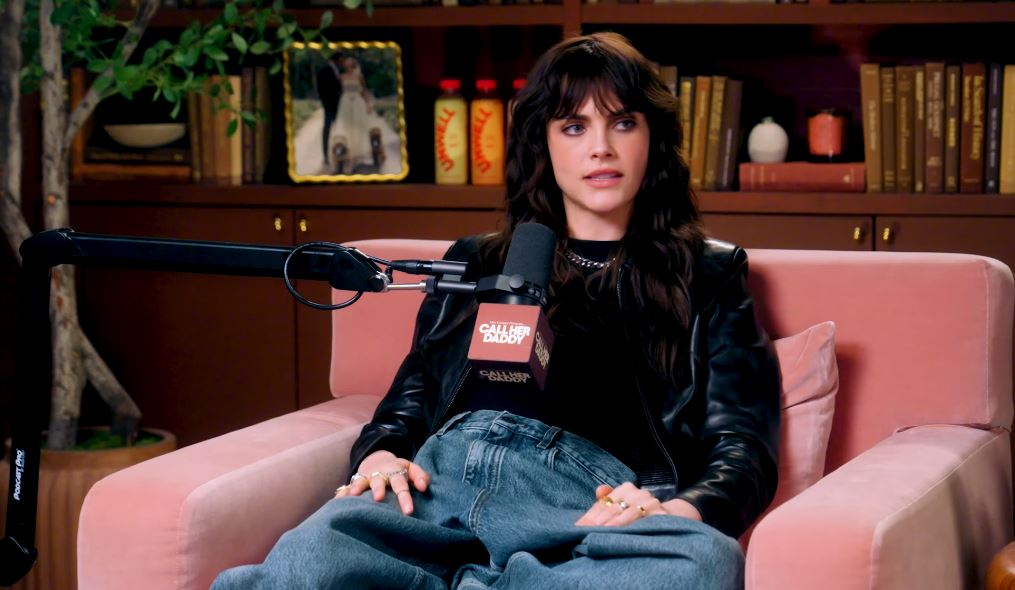
The familiarity of Pandora’s story in a particular social class—the kind of suffering that gets dressed up in privilege and mostly goes unaddressed until a daughter becomes well-known enough for people to start asking questions—makes it more difficult to sit with. When Cara first appeared on the Call Her Daddy podcast in early June 2026, she talked candidly about how her mother’s illness directly contributed to her own downward spiral into substance abuse. Around the age of fifteen, she began experimenting with drugs. According to her, ketamine was popular in London at the time. also hallucinogens.
Teenage experimentation is not uncommon, so it’s possible that some of this would have occurred regardless, but what Cara described was more specific than rebellion. “I loved not thinking about my mum,” she said to host Alex Cooper, describing it as an escape. It’s a powerful sentence. It presents Pandora’s illness as an active, pressing burden that Cara was actively attempting to escape rather than merely as background context.
There’s a feeling that drugs provided the only dependable way out of that specific type of fear for a teenager who had been informed at some point that her mother might die, and who had probably witnessed that possibility unfold through hospital stays, relapses, and the peculiar limbo of loving an addict.
In an interview with The Times, Pandora acknowledged that her daughters had personally witnessed her struggle with drugs. Pandora has also discussed her addiction in public. Such candor is uncommon, particularly from a parent. It takes something to say, “Yes, my kids saw this,” while seated across from a journalist. It’s still unclear how much of that transparency helped the family heal or if it just reopened old wounds.
We do know that Pandora has been recovering from the effects of decades of addiction and bipolar disorder. Bipolar disorder is a condition that cycles in ways that make long-term recovery extremely challenging, especially when left untreated or undertreated. It’s not a weakness in character. It was never the case. However, knowing that intellectually doesn’t always make it easier to imagine what it was like to be fifteen-year-old Cara Delevingne, purchasing drugs in part to sell and in part to vanish, standing on the brink of something far darker than anyone in her social circle seemed willing to publicly identify.
Seeing everything come to light now gives me the impression that the Delevingne family’s story is still being written. Pandora made it out alive. Cara claims to be sober and rebuilding. The sickness was defeated. However, it left its mark in areas that are still apparent, such as interviews, decisions, and Cara’s description of happiness as something she had to learn to feel worthy of.
FAQs
1. What illness does Pandora Delevingne have?
She has bipolar disorder and a history of heroin and prescription drug addiction.
2. How did Pandora’s illness affect Cara Delevingne?
It drove Cara to use drugs as a teenager to escape emotional pain.
3. When was Pandora Delevingne diagnosed with bipolar disorder?
She was diagnosed in her early thirties.
4. Has Pandora Delevingne spoken publicly about her addiction?
Yes, she discussed it openly in an interview with The Times.
5. Is Pandora Delevingne in recovery?
Yes, she is a recovering addict who has addressed her struggles publicly.