
This week, there is a picture that doesn’t seem like much at first. A sixty-five-year-old woman with a white chocolate Magnum is strolling in the sunshine of London. She’s grinning. The fact that it is a modest and unremarkable image is the only reason it is significant. The woman is Fiona Phillips, and the smallness of this moment carries a particular kind of weight for those who remember her anchoring GMTV through fifteen years of British mornings. She was sharp, kind, and conducted celebrity interviews at a pace that left little room for hesitation.
The picture was shared by her husband, Martin Frizell, while he was touring Scotland for his podcast. He wrote that the number of people who stopped to inquire about Fiona while he was away, including fans, strangers, and people who remembered her from the couch, touched him.
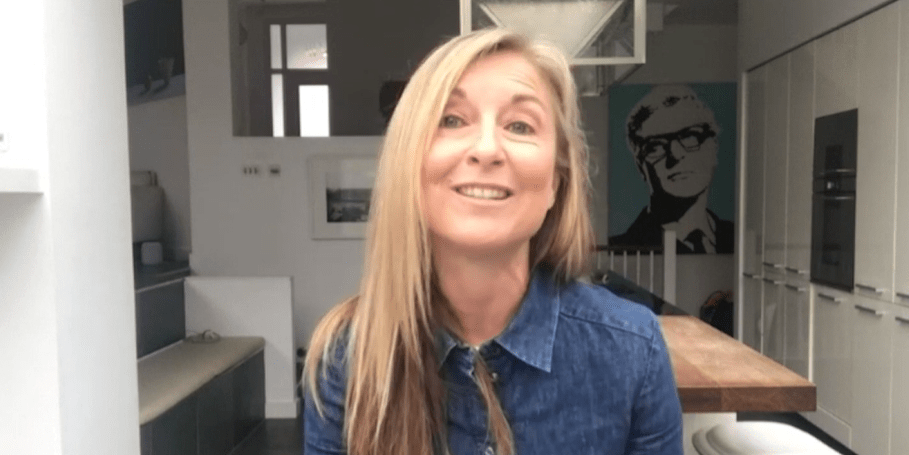
Almost as an aside, he mentioned that she had moved from almond Magnum to white chocolate. He referred to them as simple pleasures, but they were the day’s high point. That phrase’s understatement reveals more about their current situation than any official update could.
In 2022, at the age of 61, Fiona Phillips received a diagnosis of early-onset Alzheimer’s. In July 2023, she and Martin made the diagnosis public, a move that undoubtedly cost them money and greatly benefited others.
| Category | Details |
|---|---|
| Full Name | Fiona Phillips |
| Date of Birth | 1 January 1961 |
| Age | 65 |
| Birthplace | Canterbury, Kent, England |
| Nationality | British |
| Education | BA (Hons) English, Birmingham City University; PGCert Journalism |
| Profession | Retired Television Presenter, Journalist, Broadcaster |
| Best Known For | GMTV Today (ITV Breakfast Programme, 1993–2008) |
| Spouse | Martin Frizell (m. 1997, Las Vegas) |
| Children | Nathaniel Frizell (26), Mackenzie Frizell (23) |
| Diagnosis | Early-onset Alzheimer’s Disease (diagnosed 2022, disclosed publicly July 2023) |
| Memoir | Remember When: My Life with Alzheimer’s (co-authored with Martin Frizell, July 2025) |
| Clinical Trial | Participating in Miridesap drug trial, University College Hospital, London |
| Residence | Wandsworth, South London |
| Reference | Fiona Phillips |
The revelation sparked a discussion about dementia in younger people, the gap between diagnosis and meaningful support, and what it’s like for a family to deal with a progressive, incurable illness over years rather than months, topics that British public life doesn’t always handle well. Fiona claims that at first, she thought her symptoms—brain fog, exhaustion, and confusion—were signs of menopause. Many people are uncomfortable with that detail, which makes them wonder how frequently the same error is being made elsewhere in secret and without any investigation.
The family’s story is more difficult than most because of the specificity of what has been lost, which Martin has explained in some interviews. Fiona can no longer recall important dates. Valentine’s Day, Christmas, and New Year’s all pass by unnoticed. He has talked about witnessing someone who was, in his words, dynamic, vivacious, and whip-smart gradually lose control of situations that she had previously handled with ease.
She occasionally informs him that he is not her spouse. In their jointly written memoir, which was released in July of last year, he discusses how he has learned to avoid those moments rather than confront them. Remember When is not a story disguised as a grief exercise. By all accounts, it reads as something more detailed and practical—a record of a single family’s day-to-day struggles in a system that often fails to take them into account.
In order to devote all of his time to caring for Fiona, Martin quit his position as editor of This Morning at the end of February 2025. He has been open about the psychological toll, saying that he experienced depression as he watched her disappear. He talks about it in a conflicted way, expressing gratitude for messages from strangers in Scotland inquiring about his wife, relief at the respite it provides, and guilt about the podcast tour. This type of ambivalence is frequently discussed in abstract terms in the literature on caregiving. Martin Frizell posts a picture of a Magnum along with it on Instagram.
Additionally, he has been focusing more and more on the policy aspect. Only a small portion of the money allocated to cancer research is used for Alzheimer’s research. Martin has directly criticized the government’s decision to abandon its goals for diagnosing the illness.
He has brought up the fact that Fiona’s first prescription was the same medication that her mother was given twenty years prior, a fact that casts doubt on any notion that significant progress is being made at a rapid pace. Cost-benefit analyses, a term that sounds clinical until you consider what it means in a particular Wandsworth household on a particular Tuesday afternoon, prevent new drugs developed in the United States from being available in Britain.
Fiona took part in a clinical trial for Miridesap, an experimental medication intended to slow the disease’s progression, at University College Hospital in London. It’s still unclear if it has had any discernible impact on her case, but the act of taking part feels important because it aligns with her professional persona as someone who ran toward challenging stories rather than away from them.
It’s difficult to ignore the extent to which the public’s reaction to her story reflects a wider desire for candid accounts of illness that don’t end neatly. The book was accepted into the Alzheimer’s Society book group. The image of the Magnum is being shared by people who don’t typically follow health news. As this develops on social media and in breakfast television coverage, there’s a sense that Fiona Phillips is doing something significant just by being visible. not making a recovery. not being optimistic. simply enjoying ice cream, taking a stroll in the sunshine, and allowing a loved one to share the photo.
Ultimately, that’s what the picture is really about. Not to diminish. Not loss, even though both exist. It is about a Tuesday that was good by today’s standards.