
Being informed that you had a heart attack eight months after it happened is a certain kind of cruelty. Not a cautionary tale. It was not a close call. An actual cardiac event—and you’d assumed it was anxiety for the better part of a year. Libby Trickett, one of the most decorated swimmers in Australian Olympic history, experienced that, and neither she nor many onlookers have fully recovered from the revelation.
In June 2025, about two months after giving birth to her fifth child, a boy named Archie, Trickett experienced a spontaneous coronary artery dissection, or SCAD as it is known in cardiology circles. She was taking her daughters to swimming lessons at the time, which was a perfectly normal activity. Then she experienced a tightness in her chest, lightheadedness, and what she called a feeling of “impending doom.” She visited her physician. The occasion was over. Life went on. The diagnosis came like cold water to the face eight months later.
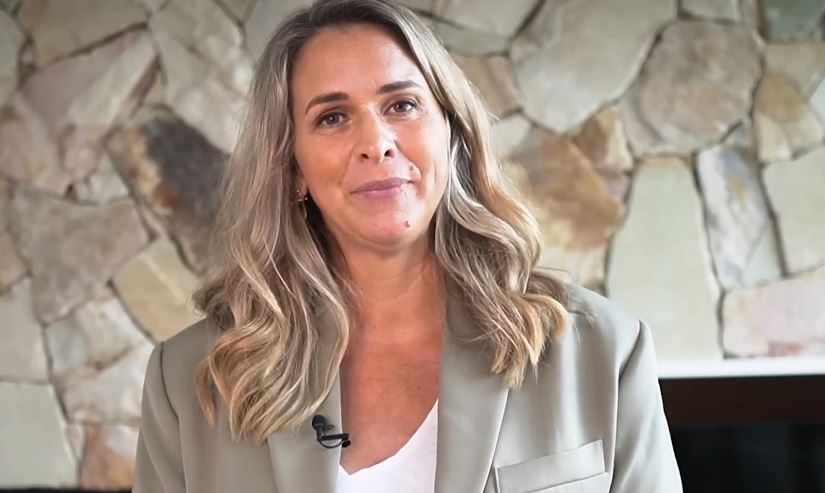
In public health campaigns, SCAD is not the heart attack that is discussed. It has nothing to do with years of poor diet, sedentary lifestyle, or clogged arteries. Rather, a tear develops in the coronary artery’s inner wall, which abruptly and unpredictably stops blood flow. This is particularly unsettling because it primarily affects healthy women under fifty who are frequently postpartum and occasionally have a genetic component that is still unknown. That description was nearly perfect for Trickett, a woman who trained her body to elite Olympic standards for the better part of her life.
She is right when she says that the condition is “under-researched.” It’s difficult not to feel a little frustrated for her. In a straightforward comment on her Instagram post, a critical care paramedic stated that they had been raising concerns about SCAD for more than ten years after witnessing young women who were experiencing cardiac events almost be written off as nervous. Even though Trickett’s story is uncomfortable, it is not unique, and the medical system’s blind spot for women’s heart health is not new.
Trickett is currently dealing with an odd form of ongoing uncertainty. SCAD carries a quantifiable risk of recurrence. The reason why some women have it again is a mystery to doctors. She will probably take heart medication for the rest of her life. Heavy lifting is not permitted. Given her athletic background, the fact that even roller coasters are now a question mark seems almost ridiculous, but it illustrates how meticulously she has managed her life. The woman who once set world records in swimming is now negotiating the conditions of daily activity with her own cardiovascular system.
In an emotional Instagram video from April 2026, she discussed all of this; she was obviously still processing it and was clearly shaken. The reaction was prompt and friendly. Support was sent by other prominent Australians. The post was shared by medical professionals. In contrast to a typical celebrity health disclosure, her followers, many of whom were mothers themselves, instinctively understood why this struck a different chord.
It seems as though Trickett is purposefully utilizing this moment. Her willingness to sit with complexity—the not-knowing, the ongoing uncertainty—feels genuine rather than performative, and she has previously been candid about her struggles with mental health. She isn’t concluding this with a tidy recovery story. That’s not as messy as it is. She described the diagnosis as having “lots of different implications,” which she is still working through.
In the end, Libby Trickett’s illness reveals more than just a personal health tale. It serves as a window into how ill-prepared the medical community is for a condition that primarily affects women and how much work still needs to be done to get the diagnosis correct before eight months pass in silence.
FAQs
1. What illness did Libby Trickett have?
She suffered a SCAD — a spontaneous coronary artery dissection heart attack.
2. When did Libby Trickett’s heart attack happen?
It occurred in June 2025, two months after giving birth to Archie.
3. How long did it take to diagnose her condition?
Eight months passed before doctors confirmed it was a SCAD heart attack.
4. Who does SCAD typically affect?
It mostly strikes healthy women under fifty, often postpartum or pregnant.
5. Can Libby Trickett exercise normally now?
No — she’s restricted to moderate cardio and cannot lift heavy weights.