
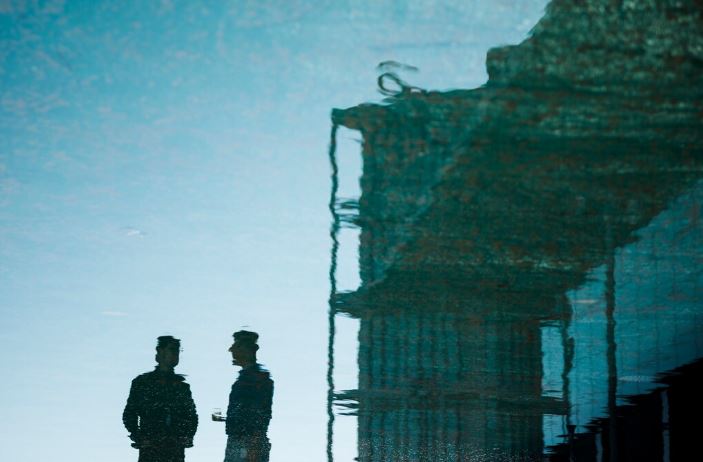
Around dusk, you begin to notice the little things when you stroll through any neighborhood in central Tehran. With the composure of someone who has done it a hundred times, a shopkeeper resets a generator. Before the tap dries up once more, a woman fills plastic jerrycans. Kids working on their homework under a phone’s blue light. It appears that no one is shocked anymore. That’s the part that merits a pause.
Due to sanctions, internal mismanagement, aging power plants, and the more recent shock of military strikes, Iran‘s infrastructure has been deteriorating for years. Power outages are no longer an occurrence. These are appointments. People have learned to plan their lives around scarcity in the same way that others plan around traffic when there is an unexpected water shortage. It’s a peculiar kind of normal, and as it develops, it’s difficult to ignore the feeling that something more profound is happening beneath all those turned-off streetlights.
| Topic Snapshot | Details |
|---|---|
| Subject | Iran’s prolonged infrastructure crisis and its psychological parallels |
| Region Most Affected | Tehran, Khuzestan, Sistan-Baluchestan, Ilam |
| Estimated Iranians With a Diagnosable Mental Disorder | Roughly 1 in 4 |
| Iranian Red Crescent Psychological Helpline Calls (as of March 31, 2026) | More than 130,000 |
| Civilians Killed in Recent 39-Day Conflict | Nearly 1,900 |
| Buildings Damaged or Destroyed | Over 100,000 |
| Recognised Long-Term Risks | PTSD, somatic symptoms, intergenerational trauma, depression |
| Cited Global Bodies | World Health Organization, United Nations, Human Rights Watch |
| Cultural Context | Stigma around mental health, limited rural access, fewer than 1,000 licensed psychiatrists nationwide |
In actuality, a city experiencing ongoing stress starts to act similarly to a mind experiencing ongoing stress. The similarities are nearly impossible to overlook. Just as overworked brains start to fail at their weakest nodes, so too do power grids that are stretched beyond capacity. Similar to how a depleted reservoir starves a turbine, cortisol, that obstinate stress hormone, depletes the prefrontal cortex. Both systems were designed with overnight recovery in mind. Neither is given the opportunity.
Psychiatrists who work with Iranian populations, including diaspora communities as far away as Canada and New Zealand, feel that the nation is living in a state of collective hypervigilance. Dr. Arash Javanbakht of Wayne State University has discussed how the body essentially rewires itself for danger in individuals who are repeatedly exposed to trauma. In a sense, Iranians are already rewiring themselves. They keep an ear out for sirens, the meter’s click, and the quiet that indicates the water has stopped once more. Similar to the grid, the nervous system is unable to stand.
What appears to be resilience on the outside might actually be more akin to exhaustion, with nowhere to go. Neighborhoods are isolated during extended blackouts. People become isolated after prolonged stress. Emotional connection and communication networks both break down. According to a 2023 study by the Iranian Psychiatric Association, depression rates are higher than 40% in several southern provinces, and it is still difficult to measure depression in the more conservative areas because so many people there just don’t discuss it. Stigma functions similarly to a fuse box without a schematic; you don’t know what’s wrong until everything goes dark.
I keep thinking about the somatic aspect of this. People in Tehran talk about numb fingers, trembling hands, and an inexplicable tightness in the chest. Shirin, an activist who was interviewed by the BBC earlier this year, claimed that following an arrest, her left hand stopped functioning normally. The body records what the mind tries to ignore, just like the city.
Observing all of this from a distance gives the impression that Iran is experiencing multiple overlapping crises, each of which is exacerbating the others. People are weakened by the grid. People are so worn out that they are unable to resist the system that is weakening them. It is truly unclear when the nation will be able to leave survival mode. The quiet breakdowns occurring behind closed doors and the flickering lights throughout Tehran are both parts of a lengthy narrative that the world has been reluctant to acknowledge.