
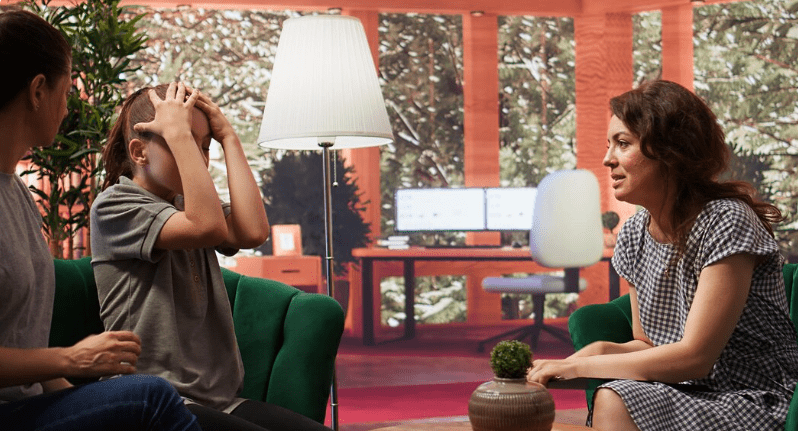
There is a specific type of loneliness that lacks a clear term. It’s not the loneliness of spending a Friday night by yourself or losing someone due to time or distance. It’s more subdued. You find yourself at a table with people you’ve known for years, in the middle of a group conversation, and you realise you have very little to say. You’re there in person. You’ve already moved on emotionally.
When emotional development surpasses a social circle, it feels like this, and it occurs far more frequently than most people openly acknowledge. The experience usually develops gradually over months or years, until one typical Tuesday you have coffee with an old friend and realise that the conversation, which was once casual and friendly, now feels more like a show. Not because something went wrong. Not because anyone misbehaved. simply because the space you once shared is no longer entirely appropriate for the person you are today.
| Topic | Emotional Growth and Outgrowing Your Social Circle |
|---|---|
| Nature of Topic | Psychology / Personal Development / Relationships |
| Core Experience | Feeling misaligned, misunderstood, or emotionally drained within existing friendships during personal growth |
| Common Age Range Affected | Late 20s through 40s, though it can occur at any life stage |
| Key Psychological Concept | Social identity shift, values misalignment, and emotional depletion |
| Warning Signs | Self-censorship, one-sided support, post-social exhaustion, craving deeper conversation |
| Recommended Response | Gradual, respectful distancing — not abrupt cutting off |
| Research Insight | Studies show people consistently underestimate peers’ empathy, leading to avoidance of genuine connection |
| Related Field | Positive psychology, attachment theory, and social neuroscience |
| Reference Website | World Happiness Report — Social Connections |
Social identity researchers and psychologists have long noted that people’s relational needs change in ways that their current networks can’t always meet as they grow—whether through therapy, life experiences, career changes, spiritual exploration, or just paying more attention to how they want to live. Many people underestimate their peers’ capacity for true empathy and connection, according to the World Happiness Report, which causes them to hold back rather than strive for something more meaningful. A specific type of silent grief is produced when that withholding occurs frequently enough in enough relationships.
The fact that there isn’t clear permission to grieve is what makes this experience so challenging. No breakup has occurred. No falling out. Nothing to point to. Simply a growing awareness that the conversations that revolve around the same grievances, jokes, and low-stakes dramas are no longer providing you with the nourishment you truly need. Almost invariably, this feeling is accompanied by guilt, the uneasy perception that being aware of this disparity makes you conceited, disloyal, or excessive in some other way.
To put it simply, it doesn’t. Growth does not equate to treachery. It’s important to state this clearly because the cultural messaging surrounding friendship, particularly for women but also for men in more subdued ways, tends to view established social networks as things that should be preserved at all costs. It’s still surprisingly controversial to think that you might need different people at different stages of your life and that it’s not only acceptable but sometimes necessary to loosen some ties while tightening others. You can see the weight of that expectation resting on someone when you watch them deal with this in real life.
Rarely are there obvious indicators that a social circle has become out of alignment. They manifest as brief, recurring incidents, such as editing oneself before speaking, downplaying good news to prevent a particular response, or leaving a gathering feeling more exhausted than when you arrived. There’s the progressive one-sidedness where you’re always the one providing support, listening, and holding space, and the reciprocity just doesn’t materialise. There is a desire for a dialogue that is authentic, acknowledges complexity, and avoids returning to well-known grievances. Individually, none of these is damning. When combined, they create a picture.
How you handle this shift is crucial, and it is often overlooked in the louder cultural discourse about cutting people off. The social media acronym “protect your energy” has led to a casual brutality toward former relationships that is, at the very least, worthy of scrutiny. Because they are developing at a different rate or in a different direction, people who once mattered do not cease to matter. It’s a skill to put some distance between you and someone, or to make a friendship less important without destroying it. It calls for openness, thankfulness, and a readiness to embrace the complexity of caring for someone while acknowledging that the intimacy has shifted.
There is a time in between that can feel genuinely stark, after some connections have loosened but before the new ones have fully developed. It’s probably more difficult and beneficial to sit with that gap rather than rush to fill it. The right people may be closer than they seem—those whose honesty, curiosity, and values align with who you’re becoming. However, they usually appear when the area is truly available to them.