
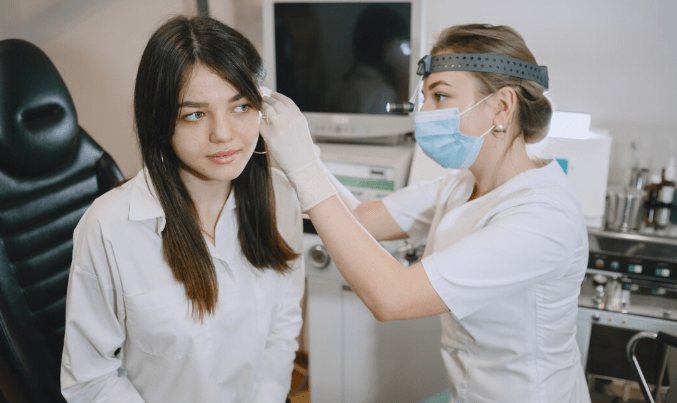
In the medical field, 1958 is a long time ago. It comes before Medicare. It predates the majority of imaging technologies that are considered basic by modern doctors. It undoubtedly existed before the expansive, multi-campus healthcare system that now characterizes Central Florida, complete with shiny hospital hallways, urgent care facilities everywhere, and telehealth platforms that promise same-day access via a phone screen. The Ear, Nose, Throat & Plastic Surgery Associates has persisted in the face of all that change. Since the practice first opened its doors in Orlando, it has not only survived but grown, adding locations and doctors throughout a region that has grown almost beyond recognition.
That kind of longevity is worthwhile. The majority of medical practices don’t survive to be 65 years old. Those who succeed typically have established systems, training cultures, and intergenerational patient relationships that are more resilient than a positive reputation. A grandchild may be waiting in line at the Lake Nona or Celebration location today if their grandparents received sinus treatment there in the 1970s. In the healthcare industry, where trust is genuinely difficult to transfer and even more difficult to maintain across leadership transitions and changing medical standards, that is not a minor issue.
| Category | Details |
|---|---|
| Practice Name | Ear, Nose, Throat & Plastic Surgery Associates, PA |
| Founded | 1958 |
| Primary Phone | (407) 644-4883 |
| Specialty | Otolaryngology (ENT), Facial Plastic & Reconstructive Surgery, Allergy, Audiology |
| Physicians | 11 Physicians, 5 Physician Assistants |
| Locations | Lake Nona, Winter Garden, Winter Park, Altamonte Springs, Celebration, Central Orlando |
| Services | ENT, Hearing & Balance, Allergy Care, Voice Therapy, Swallowing Disorders, Facial Surgery |
| Office Hours | Monday–Friday, 8:00 AM – 5:00 PM |
| Appointment Options | Same-Day and Next-Day Available |
| Patient Portal | Available Online |
| Official Website | entorlando.com |
Eleven doctors and five physician assistants work at the practice’s six locations in the greater Orlando area: Lake Nona, Winter Garden, Winter Park, Altamonte Springs, Celebration, and Central Orlando. For a specialty practice, that footprint is significant and indicates intentional geographic thinking as opposed to natural drift. Over the past 20 years, the population of Central Florida has expanded significantly, so a practice with just one or two locations in that area would essentially be giving patients to whoever set up shop closer to where people actually live. Growing into neighborhoods like Winter Garden and Celebration demonstrates an awareness of where the growth has gone.
Contrary to what the name might first imply, a wider range of topics is covered here. Indeed, otolaryngology—the study of ears, noses, throats, and the intricate structures of the head and neck—is the main focus. However, head and neck cancer, tinnitus, dizziness, snoring, sinusitis, allergies, hearing and balance issues, swallowing issues, and voice therapy are just a few of the conditions that fall under that broad category. The offering is completed with facial plastic and reconstructive surgery, allowing patients to receive treatment for both functional and cosmetic issues pertaining to the face in the same practice. Finding that kind of integration is more difficult than it seems. When dealing with head and neck problems, the majority of patients wind up visiting several specialists, each of whom only sees a small portion of the problem. It is truly helpful to have a practice that can bring more of that picture together in one location.
Care for allergies seems to be becoming more and more important. Recent communications from the practice focus on seasonal allergy messaging, such as pollen counts, swimmer’s ear, and the limitations of over-the-counter remedies. This suggests that they are reaching patients who may not have considered an ENT practice as their first choice for allergy symptoms. This might be the result of a calculated move to reach a larger patient base at an earlier stage of treatment, before symptoms worsen to the point where a specialist is required. It’s unclear if that outreach results in mostly one-time visits or long-term patient relationships, but the effort itself is noteworthy.
It’s difficult to ignore the practice’s explicit promotion of same-day and next-day appointment availability. Such access is truly rare in specialty medicine. For years, specialist wait times have been a major source of annoyance in American healthcare; in certain markets, it can take weeks or months to see a specialist. This size of practice, with several locations and a full medical staff, is better positioned than most to provide true scheduling flexibility, and the fact that they are promoting it as a patient-facing promise indicates that they are aware of what potential patients are genuinely concerned about when they pick up the phone.
“Excellence with Humility, Service with Compassion” is the practice’s motto, but if it isn’t supported by actual practice, it could just be wallpaper. It’s challenging to evaluate from the outside how consistently that promise holds across six locations and sixteen providers because patient experiences are what they are, and online reviews are the complex, imperfect signal that they always are. What is evident is that the practice has maintained enough patient trust over an extended period of time to continue growing rather than shrinking, which is typically the most accurate metric available in the healthcare industry.
There’s a sense that the Ear, Nose, Throat & Plastic Surgery Associates has experienced enough cycles of change to face the next one without panicking when you watch a practice like this navigate the current moment in American medicine: growing administrative complexity, changing patient expectations, and the pressure to offer digital convenience without losing the personal quality that older patients particularly value. A person learns something over the course of 65 years. The question is whether medical institutions established during one era are adaptable enough to effectively support the next. At least this one deserves to be given the benefit of the doubt.