
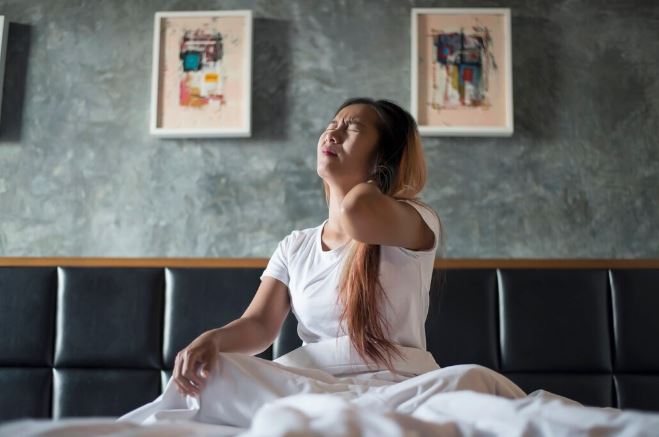
A quiet Brooklyn apartment on a Saturday afternoon marks the completion of the to-do list. The laundry was folded. In the refrigerator, groceries are arranged neatly. The laptop shut down. Pulling a blanket over her legs, the woman on the couch lets out a breath.
Her chest then gets constricted. Her thoughts begin to race: Did I overlook something? Should I respond to that email right away? What happens if Monday blows up? Her heart is pounding as though she’s running late, but the room is quiet save for the refrigerator’s hum.
| Category | Details |
|---|---|
| Topic | Relaxation-Induced Anxiety & Nervous System Dysregulation |
| Field | Clinical Psychology, Trauma Therapy, Sleep Medicine |
| Referenced Institution | Cleveland Clinic |
| Related Conditions | Generalized Anxiety Disorder (GAD), Sleep Anxiety, Burnout |
| Key Concept | Relaxation-Induced Anxiety |
| Reference Website | https://my.clevelandclinic.org |
Rest may not necessarily translate into safety. This is referred to by therapists as relaxation-induced anxiety. Slowing down can feel more like exposure than relief to those who have been in “go mode” for years. The nervous system perceives stillness as vulnerability because it is used to continuous movement and a low level of threat detection.
Productivity seems to have turned into emotional armor. According to the Cleveland Clinic, anxiety and sleep disturbances frequently reinforce one another, forming a vicious cycle that is difficult to break. The body loses the ability to shut down when it is overstimulated with cortisol and adrenaline. Lying in bed with the lights off and your brain buzzing, you feel wired but exhausted.
Seeing top performers attempt to take a break is eye-opening. When on vacation, an executive who does well in back-to-back meetings ends up using Slack from the beach. Finally, having a night without kids, a parent spends it organizing a closet. After planning “self-care time,” a graduate student becomes concerned that she isn’t doing it properly.
Another performance metric is rest. It’s difficult to ignore the extent to which hustle culture has influenced individual identities. Stopping feels risky if value has been determined by output, such as grades, promotions, and responsiveness. Guilt seeps in. “I ought to do more,” even when there is nothing urgent.
Shouldn’t have a good effect on the nervous system. The response may be more profound for people who have experienced trauma or ongoing stress. The body learns that being vigilant equals survival if remaining vigilant once protected against emotional or physical harm. In that situation, slowing down is like dropping a shield.
The alarm then goes off.
The heart rate increases. The mind races. Old concerns come to the surface. It’s still unclear if the anxiety brought on by rest is mainly psychological (unprocessed emotions coming to the surface when distractions fade) or biochemical (hormonal shifts dropping too quickly). Probably both.
According to one therapist, “people are outrunning their feelings during the day.” The emotions catch up once they stop. It can be shocking to catch up.
debt that you haven’t given much thought to. a friendship that is strained. Anguish that never came to rest. Those thoughts remain submerged when every void is filled with activity. The noise is reduced by rest, exposing the underneath. It’s not comfortable. It can be frightening at times.
Ironically, meditation can initially make it worse. Trying to stifle their thoughts like swatting flies, many people approach it expecting immediate calm. They believe they are failing at relaxation when the mind refuses. More anxiety is fueled by the frustration.
It’s rare for perfectionism to relax. Clinicians frequently talk about the “wired but tired” phenomenon. The nervous system is kept in high gear by ongoing stress. It would be like slamming the brakes at highway speed to try to achieve sudden stillness. The body tries to resist, shivering a little as it looks around for imaginary dangers.
Telling someone to “just relax” feels almost offensive during these times. It’s interesting to note that studies on reduced environmental stimulation therapy—which involves float tanks, low lighting, and little sensory input—indicate that some people may experience a reduction in anxiety and an increase in calm, with results that last for up to 48 hours. However, even those settings are meticulously planned. Safety signals are deliberate. The silence is contained; it doesn’t happen suddenly. Perhaps that containment is important.
Scaffolding may be necessary for rest, particularly for anxious systems. Micro-rest as opposed to a complete shutdown. Five minutes of silence rather than a whole afternoon of silence. Walking around the block, stretching, and slowly doing the dishes are examples of gentle movement before stillness.
First, movement. Then stop.
Therapists call this co-regulation—the ability to sleep better in proximity to others. Safety can be communicated more successfully by sitting next to someone steadily and listening to their steady breathing than by isolating them. It’s difficult to ignore how much more comfortable it is to unwind in a particular company. The environment is also important.
The rest will seem careless if the living room is overflowing with reminders of incomplete tasks—laptop open, notifications blinking. A phone positioned face down across the room, a door closed, and soft lighting. tiny cues. They are read by the nervous system.
Then there is the internal discussion.
“You’re slack.”
“Your time is being wasted.”
“Everyone else is in front.”
Adulthood is frequently preceded by those scripts. They were acquired somewhere—appreciated for their utility, chastised for their slowness, and commended for their productivity. That identity is threatened by rest.
Anxiety at rest may be a protective reflex rather than a malfunction. The body is anticipating, bracing, and preparing as it has learned to do.
However, safety can turn into a prison.
Constantly skipping sleep eventually leads to increased irritability, burnout, and disturbed sleep. Eventually, the body demands recovery. It might not be courteous when it does.
Eventually, the woman in the Brooklyn apartment moves onto the couch and takes in the warmth of the blanket and the subtle aroma of freshly laundered laundry detergent. She slows her breathing a little, not too much, but enough.
Nothing disastrous occurs.
The email can wait. Monday is still not here. The steady, innocuous hum of the refrigerator persists.
Some nervous systems do not immediately exhale when they are at rest. It’s a skill that must be acquired gradually, practiced imperfectly, and overcome ingrained fears.
Perhaps the true relief comes from realizing why calm felt dangerous in the first place, rather than from trying to force it.