
Some deaths in sports feel like a period at the end of a long and full career. They are sad, but they fit the shape of the career. Some deaths feel like they were cut off in the middle of a sentence. The clear answer is the second one, since Tom O’Brien died on November 11, 2026, at the age of 39. He didn’t seem like he was bored. He wasn’t a man who was being lost. Everyone said that he was a man who had just found his next act.
In 2004, O’Brien moved to England to work at Philip Hobbs’ stable in Minehead, Somerset. He stayed at the same stable until he retired in 2023, which is almost unheard of in a sport where jockeys move between stables as horses do. Being that steady says something about a person. It says they value getting to know people. It means that they aren’t always comparing themselves to what other people might be getting. That’s the kind of personality that makes someone a good team player, a reliable coworker, and, presumably, a good person to know.
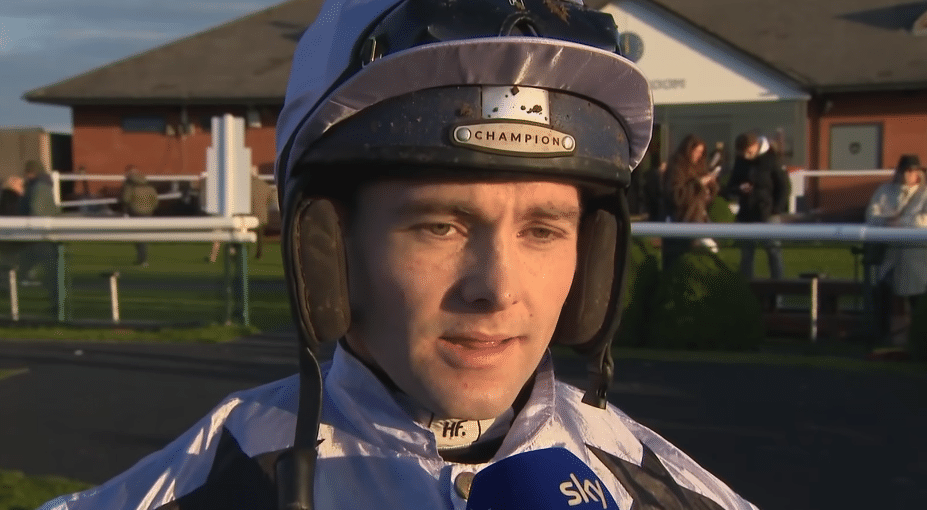
During his career, O’Brien rode a steady stream of notable winners, including two Welsh Grand Nationals, two Cheltenham Festival wins, and five Grade 1 wins. Many people outside of racing’s inner circle may not have given his career enough credit. He worked as Richard Johnson’s second jockey for many years, doing quiet work while Johnson got all the attention.
People who weren’t paying close attention may not have noticed him as much because of the nature of his job. This makes it even more surprising that when Johnson retired in 2021, O’Brien just took over and kept producing. On a Sunday afternoon in Britain and Ireland, he hit his 1,000th career win at Worcester. Head On was the horse that crossed the finish line to mark the occasion. A thousand winners. In a sport that breaks most people who try it.
To some extent, it seems like he got sick just as things were getting better. After his last ride on Thyme Hill in the Grade 2 Select Hurdle at Sandown in April 2023, O’Brien announced his retirement. He quickly became a member of the BHA’s stewarding team, which was a good fit for a man who had been reading races for 20 years. In every way, it was the start of something new. Soon after, the cancer diagnosis came as a shock, making the story of Tom O’Brien harder to look at directly.
O’Brien was born in Wexford on November 28, 1986. During his career, he rode 1,077 winners, which is a record that not many jump jockeys ever reach. His win on Dream Alliance in the Welsh Grand National in 2009 has a certain kind of magic to it.
That win has since been the subject of a documentary and a movie, so for a whole generation of racing fans, O’Brien’s name is linked to one of the sport’s most unlikely and moving stories. There aren’t many jockeys who end up in a movie. Just a few people would be as quiet and humble about their fame as the people who knew him say he was.
People who saw him just a few days before he died say that he was at the Breeders’ Cup in Keeneland, smiling for pictures and seeming at peace despite the pain in his body. Friends and family of the jockey will remember the picture of him at a racing festival, surrounded by people who loved him, for a long time. The short time between that picture and the news a few days later is the kind of thing that makes you think about it for a moment.
After retiring from riding at the end of the 2022–23 season, O’Brien fought cancer. During his illness, he was said to have fought it with the same unwavering determination that he had shown in his riding career. Brant Dunshea, CEO of the BHA, said it simply: “Tom died surrounded by his loved ones after a long and brave battle with cancer. He fought it with the steely determination and drive that made him who he was.” You can’t just use that kind of language to say goodbye. It seems like it was just true.
Philip Hobbs, who ran the Minehead operation with Johnson White, said that O’Brien was always dependable and a great guy. He also said that he had kept in touch with Tom since he retired because he lived only 30 minutes away and that O’Brien had been in the yard three weeks before he died. Three weeks. The closeness makes the loss feel even more real for everyone who has a connection to that yard. In the best way possible, racing is a small world, and the people who work there tend to stay in touch long after work is over.
After the numbers and wins are gone, all that’s left is the memory of someone who showed up. At the same yard for 19 years. For each race, each cold morning spent on the gallops, and each time the work wasn’t fun or noticed. He loved his wife Hayley and their two young sons very much. They are the ones who have to deal with the real effects of this now.
The world of racing will grieve, as it always does, and then go on. That’s how sports work. His family, on the other hand, doesn’t have that continuity. They only have the absence of a man who was still in the middle of his life.
Because he was sick, Tom O’Brien died too soon. There’s no doubt about that. A winner count doesn’t show how hard it is to replace what he left behind in the weighing room, on the gallops, and in the BHA’s stewarding offices.
FAQs
Q1: What illness did Tom O’Brien have?
Tom O’Brien battled cancer after retiring from race riding in 2023.
Q2: How old was Tom O’Brien when he died?
He died on November 11, 2026, aged just 39.
Q3: When did Tom O’Brien retire from jockeying?
He retired in April 2023 after his final ride at Sandown.
Q4: How many winners did Tom O’Brien ride in his career?
He rode 1,077 career winners across Britain and Ireland.
Q5: What did Tom O’Brien do after retiring from racing?
He joined the British Horseracing Authority as a steward.