
Julie Hesmondhalgh has a subtle allure. In her final months on Coronation Street, she had to play a terrifying character: a woman dying of pancreatic cancer. She had spent sixteen years playing Hayley Cropper, the warm, humble, red-anorak-wearing figure who became one of the most beloved characters on British television. Millions of people observed. It was completely convincing, meticulously executed, and gut-wrenching. The fact that illness, in all its forms, wasn’t just something Hesmondhalgh performed may have gone unnoticed by audiences at the time. In the years that followed, she lived in proximity to it.
Her niece Rosa Hesmondhalgh, who was only twenty-three at the time and had just graduated from the London Academy of Music and Dramatic Art, the same institution Julie had attended herself, was diagnosed with a rare type of ovarian cancer in 2018, only a few years after leaving the Street. Rosa had experienced excruciating bloating and had gone to A&E. The devastating news was that she had an ovarian tumor that had spread to nearby tissues. That kind of diagnosis is devastating for any family. For the Hesmondhaighs, it meant supporting someone who ought to be in the early stages of her career rather than battling for her life.
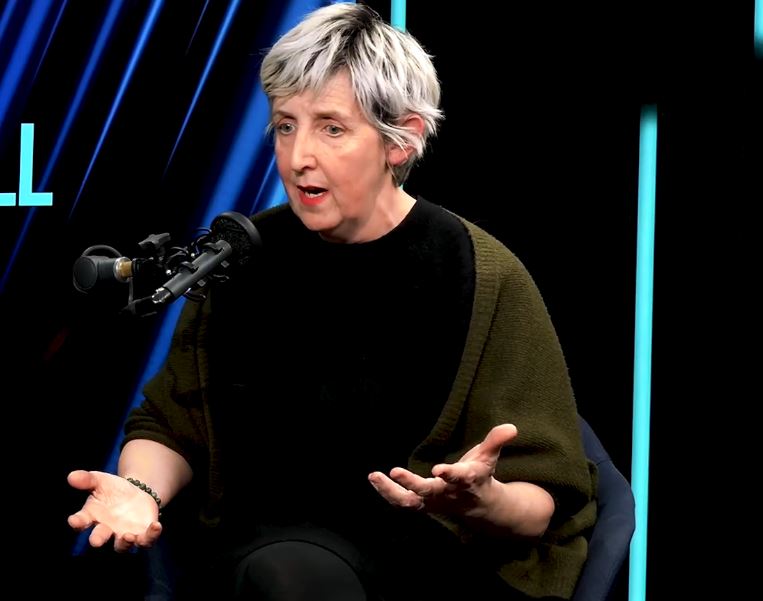
Julie’s answer reveals something about her true nature. She did more than simply post a message of support or send flowers. She physically traveled to London and took time off from a Manchester theater production to sit by her niece’s bed. She also brought a notebook. She had written something that stuck inside the front cover: “Write the f*** out of it.” It was direct, affectionate, and useful. Exactly the kind of guidance that only makes sense when it comes from someone who recognizes that creativity can serve as a means of survival rather than a diversion from it.
Rosa was a writer. She maintained a humorous blog while dealing with chemotherapy, hair loss, and the peculiar and harsh experience of confronting death in your early twenties. After receiving the all-clear in June 2019 following over a year of treatment, she used everything she had written to create Madame Ovary, her debut play, which she performed at the Edinburgh Fringe before touring the UK. It’s difficult to ignore the fact that Rosa’s aunt’s encouragement to write in a hospital room turned out to be what kept her going.
Beyond her family, Hesmondhalgh has a connection to illness. During Rosa’s treatment, Julie started supporting a pancreatic cancer campaign, which raised money and awareness for research into one of the most underfunded and underdiscussed cancers in the UK. The timing wasn’t accidental. There’s a feeling that witnessing a loved one struggle with a serious illness alters your perspective on advocacy. It ceases to be abstract.
She has also been an outspoken advocate for research on pulmonary fibrosis, a condition that has impacted her family and seldom receives the recognition it merits. She has addressed the devastation caused by pulmonary fibrosis and the urgent need for funding in videos for Action for Pulmonary Fibrosis. Her words, “Pulmonary fibrosis has devastated our family,” have a weight that no press release could match.
The most intriguing aspect of Hesmondhalgh is probably how she has used these experiences. She didn’t switch to public grieving or wellness content. She continued to work in demanding, serious roles while subtly rising to prominence as an advocate for health issues that don’t always garner celebrity attention. Rosa was given the all-clear, and the two of them reportedly ended up close to the front of the demonstration as they marched through London in support of NHS funding. Perhaps going through a health crisis together created a bond that goes beyond the usual aunt-niece relationship.
In October 2026, Hesmondhalgh will make an appearance on the second season of The Celebrity Traitors. She continues to be one of those British actresses who seems to inhabit rather than perform her work. She always seemed to be drawing from something real, whether she was portraying Hayley’s subdued acceptance of her terminal illness on Coronation Street or giving an Olivier Award-winning performance in Punch earlier this year. That could be considered craft. It feels more than that, though, given how she has handled the past few years—the illness in her family, the advocacy work, and the notebook she gave to her niece.
FAQs
1. What illness did Julie Hesmondhalgh’s niece Rosa face?
Rosa was diagnosed with a rare form of ovarian cancer in 2018.
2. How did Julie support Rosa during her cancer treatment?
She visited Rosa in hospital and gave her a notebook, encouraging her to write.
3. What health causes has Julie Hesmondhalgh publicly supported?
She has campaigned for pancreatic cancer awareness and pulmonary fibrosis research funding.
4. Did Rosa Hesmondhalgh recover from her cancer?
Yes, Rosa received the all-clear in June 2019 after over a year of treatment.
5. What did Rosa create from her cancer experience?
She wrote a debut play, Madame Ovary, performed at the Edinburgh Fringe.