
A picture of Hang Mioku was taken before the surgeries. She is young and conventionally attractive by any measure, with clear skin, sharp cheekbones, and a face that could easily land a job. Then there’s the picture that was taken twenty years later. It is hard to stare at for very long. In the second picture, the face is nearly unrecognizable due to swelling, with layers of foreign material covering its features. When she returned from Japan, her own parents were unaware of her identity.
You remember that particular detail. It says something about how far things had gone and how totally the obsession had taken over when a mother looks at her daughter and notices a stranger.
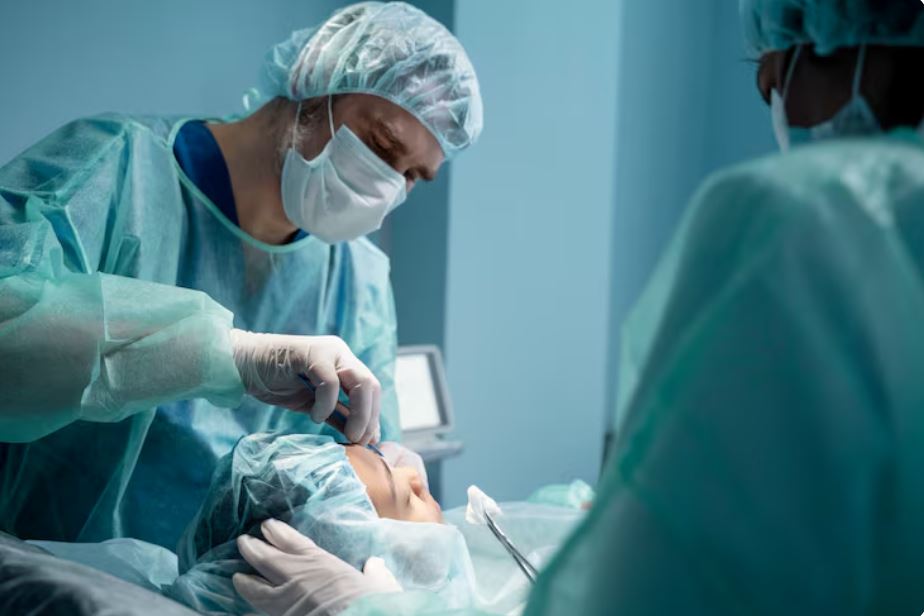
At the age of 28, Hang Mioku underwent her first cosmetic procedure. According to most accounts, she was already employed as a singer and model and knew how important her appearance was to the business. The relationship between South Korea and cosmetic surgery is well-established and, in some quarters, practically accepted. In Seoul’s Gangnam neighborhood, clinics are concentrated along what has been dubbed the Beauty Belt, and the nation routinely ranks among the top in the world for the number of cosmetic procedures performed per person. Hang saw that initial surgery more as the opening of a door she would never be able to fully close than as a vanity decision.
She had numerous surgeries over the next 20 years, traveling back and forth between South Korea and Japan in search of an elusive goal. The surgeons who had operated on her face ultimately declined to proceed because the tissue was too damaged, the risks were too great, and the results were already too deformed to be properly improved. She might have realized at this point that she had crossed a boundary that most people never go near. However, the awareness was subordinated to the compulsion.
The part that is truly difficult to comprehend is what transpired next. She discovered a physician who was willing to give her silicone injections, but even more astonishingly, he was willing to give her a syringe and supplies so she could continue the injections at home. She reached for cooking oil when the silicone ran out. No number of corrective surgeries could completely reverse the disastrous and irreversible outcome.
When her story was eventually revealed to South Korean television viewers, the public’s reaction was subtly amazing. Several facial reduction procedures were made possible by the donations made by viewers. Over the course of several procedures, doctors extracted 260 grams of foreign material from her face and neck. The swelling subsided. The wounds were still there. The donations seem to have been motivated more by a sense of collective guilt than by compassion; in some ways, South Korea’s beauty industry had made it possible for a woman like Hang to fall this far without anyone noticing.
Hang Mioku has expressed her desire to regain her original face in public. It’s the kind of statement that appears clear on the outside but is devastating on the inside. Her story subtly and uncomfortably shows that surgical addiction doesn’t look like people think. It doesn’t make an announcement. It starts with one process and a sense of progress, after which it needs upkeep, correction, and more correction. It usually takes years for the compulsion to become apparent to others.
It’s still unclear, in some way, whether the medical community, the beauty industry, or the culture surrounding her should be held accountable.