
You’ll notice something subtle when you walk into any general practitioner’s office on a busy Tuesday afternoon. At the desk, people hesitate. When they pull out the prescription pad, they speak more quietly. Although it is now easier to talk about antidepressants than it was twenty years ago, the conversation that usually occurs later—often months later—is still spoken in fragments. The atmosphere has improved. It is no longer foggy. However, something else has become silent, something that patients find difficult to identify without looking at the ground.
Physicians have long been aware of this. The literature is not brand-new. The willingness to express it clearly is new. The class of drugs known as selective serotonin reuptake inhibitors, which includes paroxetine, sertraline, fluoxetine, and a few others, can dampen arousal, delay or eliminate orgasm, and blunt desire in ways that feel more mechanical than emotional. Estimates differ greatly, in part because patients give cautious answers and in part because researchers pose the question in different ways. According to some research, the incidence is roughly 25%. Some push it over seventy. Near the top of almost every list is paroxetine, which was once widely distributed by cardiologists and general practitioners.
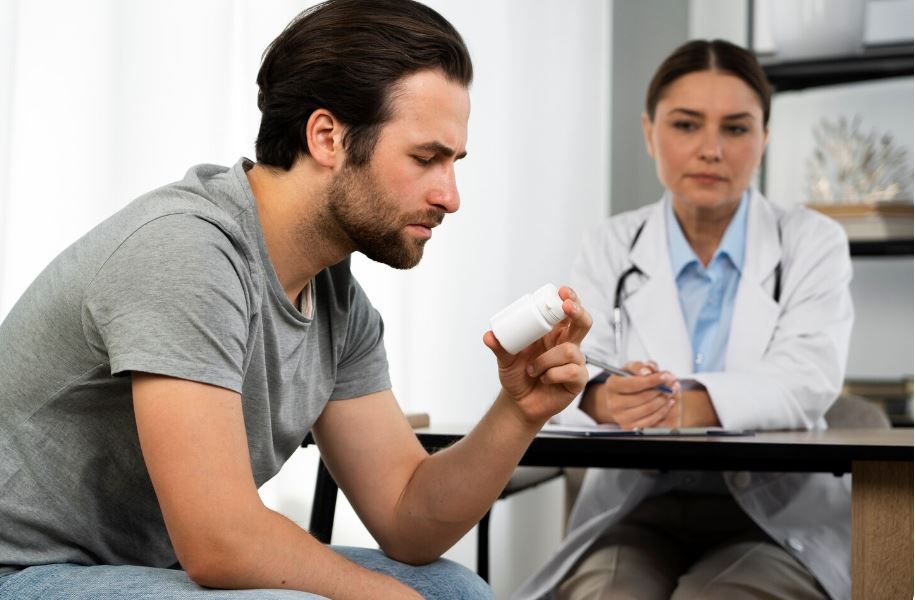
Speaking with medical professionals who have been prescribing these medications for decades gives the impression that the field underestimated the significance of this. In the early days of Prozac, it was believed that there was nothing to lose because depressed people weren’t really interested in sex anyhow. That presumption has not held up well. The attribution is truly complicated because between 35 and 50 percent of individuals with untreated depression already report having problems with their sexuality before taking any medication. Is it the sickness? The drug? A mix that changes every week? Nobody seems to be completely certain.
The regulatory tone has recently shifted. Australia’s Therapeutic Goods Administration revised its warnings in May 2024 to reflect the fact that some patients continue to experience sexual dysfunction even after stopping the medication. enduring. It’s a powerful word. It alludes to a longer narrative that has been discussed for years by researchers, primarily in online patient communities prior to official documentation. It’s still really unclear if this is uncommon or just underreported.
In reality, the tactics that doctors suggest are more akin to negotiations than prescriptions. Sometimes the body adjusts, so wait it out. If depression permits, reduce the dosage. At thirty-two, no one wants to hear the phrase “schedule intimacy around the medication’s peak.” Take a short break from drugs, but be aware that there is a significant chance of relapse. Change to mirtazapine or bupropion, both of which appear to have little effect on libido. Tadalafil or sildenafil helps some men overcome the physical barrier. There are still fewer options for women, and this research gap is a sort of statement in and of itself.
It’s difficult to ignore how frequently people just quit taking their medication without telling anyone. After feeling better, they experience a sense of alienation from their partner, taper off in silence, and then the depression comes back. This loop is described by psychiatrists with a weary familiarity. The bigger question, the one the field is finally asking aloud, is whether the trade-off was ever explained honestly in the first place. There is a sense that the next ten years of antidepressant medication will look less like assurance and more like a genuine, occasionally awkward, collaboration between patient and prescriber as a result of this gradual change in clinical discourse.