
In many cities, you can see it taking place in silence late at night. A young professional is sitting at a café with a laptop open, browsing through job postings, side projects, classes, and travel itineraries—possibilities piled high on a bright screen. They are not being stopped by anything. Nobody is pressuring you to make a choice. Strangely, though, the atmosphere surrounding that moment frequently feels tense rather than freeing. It turns out that freedom can be uncomfortable.
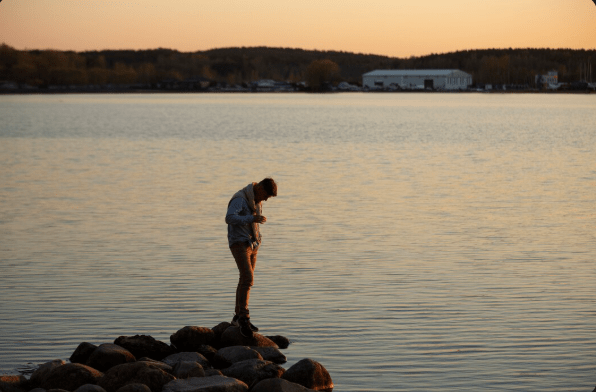
Long before psychologists started researching it, philosophers noticed this. The feeling was referred to as the “dizziness of freedom” by Danish philosopher Søren Kierkegaard. He contended that the mind feels something akin to vertigo when faced with infinite possibilities. It’s similar to the sensation one might experience when standing at the edge of a steep cliff—not necessarily wanting to jump, but suddenly realizing that it is an option.
| Category | Details |
| Core Concept | Existential Anxiety / “Dizziness of Freedom” |
| Key Thinkers | Søren Kierkegaard, Viktor Frankl, Erich Fromm |
| Psychological Term | Existential Vacuum |
| Related Idea | Paradox of Choice |
| Key Quote | “I am free, and that is why I am lost.” — Franz Kafka |
| Field of Study | Existential Psychology |
| Reference Source | https://www.psychologytoday.com |
It’s difficult to ignore how commonplace this feeling has become as one observes the course of modern life. The majority of people had very little freedom to choose their path for centuries. Farmers were farmers. Craftspeople inherited their skills. The majority of social roles were set, sometimes in an unpleasant way. Although those lives were structured, they weren’t necessarily happier. Despite its narrowness, the path could be seen. The current state of affairs is nearly the opposite.
After graduating from college, a student may encounter dozens of different cities, identities, lifestyles, and careers. Geographical boundaries have been dissolved by remote work. Constant reinvention is promised by online learning. Social media presents well-curated, seemingly polished, and purposeful lives. Possibilities abound for the modern person, which may sound fantastic in theory but frequently feels overwhelming in reality.
This is sometimes referred to as the paradox of choice by psychologists. Making decisions does not always get easier when there are more options. It frequently gets heavier.
Numerous other possible lives are silently lost with every choice. Making a career decision requires giving up another. Selecting one city entails giving up a different set of opportunities, routines, and friendships. Even minor choices start to have emotional consequences. The mind begins to ask questions for which there are no obvious answers. Daily repetition of that inner monologue can quickly turn into anxiety.
After World War II, the Austrian psychiatrist Viktor Frankl noticed a similar phenomenon that he named the existential vacuum. People in this state are crushed by emptiness—a subdued sense that life is aimless—rather than hardship. He contended that freedom by itself does not ensure meaning. Freedom can be like floating aimlessly. The metaphor is intentional. After all, direction functions similarly to a compass. The horizon appears the same in all directions without it.
Another, more subdued aspect of this anxiety is responsibility. Errors can be attributed to circumstances when options are scarce. However, responsibility turns inward when freedom is unrestricted. Every result starts to feel like a personal judgment.
In this regard, existential philosophers were direct. Humans are “condemned to be free,” according to Jean-Paul Sartre. Although the statement sounds dramatic, there is some truth to it. Authorship is a necessary component of freedom. Authorship also entails pressure. Today, that pressure is evident everywhere.
Individuals continuously optimize their lives through self-improvement plans, career strategies, productivity systems, and tracking habits. It appears to be ambition at first glance. It is occasionally the case. However, there’s also a feeling that a lot of people are looking for structure—something solid enough to ground all that freedom.
In his book Escape from Freedom, German social psychologist Erich Fromm identified this tendency many years ago. He contended that people frequently attempt to give up their freedom when they feel overpowered by it—through conformity, strict ideologies, or never-ending diversions. anything that lessens the difficulty of making a decision.
It’s hard to ignore the recurring themes in contemporary culture. What to watch is suggested by algorithms. Influencers make purchasing recommendations. Productivity experts meticulously plan out daily schedules. People appear eager to embrace the clarity that these systems promise. However, none of these short cuts fully resolve the underlying conflict.
Humans seem to yearn for direction, so freedom without it remains psychologically uncomfortable. a feeling of motion. A story about the direction of life. It’s interesting to note that many existentialists suggest a surprisingly straightforward remedy: dedication.
Making a decision about a craft, a relationship, or a cause inevitably reduces the range of options. Although it may seem constrictive, this narrowing frequently provides relief. Making decisions is made easier once direction is established. Instead of competing with one another, choices begin to support one another.
People who have discovered such a path frequently exhibit a discernible change in energy. Although the anxiety doesn’t completely go away, it does become more subdued and controllable. Hesitancy is replaced by movement.