
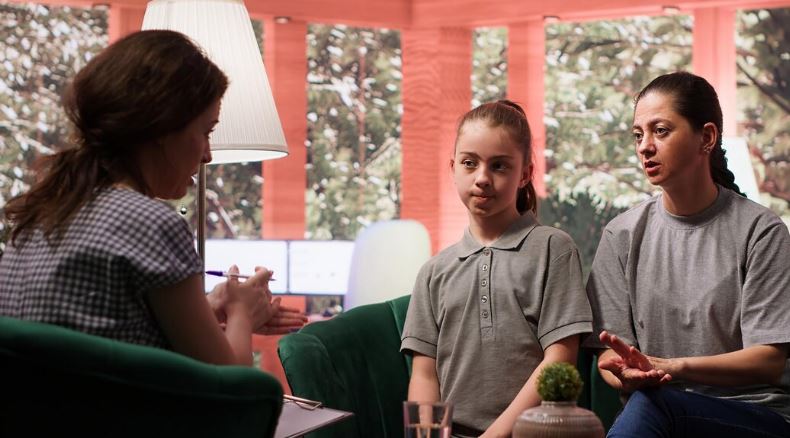
Gen Z frequently discusses their friendships with an almost ceremonial air of reverence. They celebrate friends during difficult times, refer to them as “chosen family,” and rely on them when life feels more difficult than it should. However, the same young people will frequently keep their most vulnerable truths for a professional rather than a friend, which is remarkably similar to what many therapists have surreptitiously witnessed in their offices. I’ve seen this happen time and time again: a generation that values friendships but would rather work through its worst fears in therapy.
| Item | Detail |
|---|---|
| Topic | Why Gen Z Trusts Therapists More Than Their Own Friends |
| Generation in Focus | Gen Z (born 1997–2012) |
| Core Trend | Rising reliance on professional mental-health support alongside strong, boundary-driven friendships |
| Key Insight | Gen Z embraces therapy as a confidential, bias-free space while protecting friendships from emotional overload |
| Reference Source | American Psychological Association – Stress in America Report |
Something subtle but significant has been changing in the last few years. Gen Z has begun to see therapy as a stable container for emotions that feel too volatile to be casually placed in someone’s hands as they navigate a world rife with economic uncertainty, rising anxiety levels, and a culture fixated on constant performance. In contrast to friendship, therapy provides confidentiality that feels incredibly transparent—almost like a locked vault. No matter how devoted they are, friends continue to engage in everyday activities, and their responses persist for a long time.
Gen Z is attempting to preserve the fragile structure of their friendships by relying on therapists for extensive emotional processing. They are aware of how quickly a relationship can deteriorate due to frequent late-night arguments and pressing requests for validation. Many have experienced friendships that broke down following extended periods of emotional support. Some have admitted that they don’t want to burden those closest to them out of concern that they might become “too much,” a phrase that recurs remarkably frequently in TikTok videos, college dorms, and Discord conversations.
As online content with therapy themes became more popular, Gen Z started to take in language that urged them to set boundaries more precisely. Words like “people-pleasing,” “emotional labor,” and “personal capacity” began to circulate so widely that they became commonplace. When applied carefully, these ideas developed into incredibly powerful instruments for maintaining relationships. When used improperly, they occasionally caused a rift between people who truly cared for one another but were unable to express their needs without hurting one another.
I’ve discovered through careful observation that a lot of young adults today view therapy as a necessary component of maintenance, much like previous generations did with checkups at the doctor. The therapist turns into an expert who has a near-surgical understanding of inner turmoil. Compared to friends’ multitasking support during their own stressors, sessions offer undivided attention, which feels noticeably better. In ways that friendship just cannot, the space is highly efficient, predictable, and structured.
Speaking with her therapist was “like opening a window in a room I didn’t know had gotten stuffy,” according to one young woman who told me this. She clarified that although her friends were encouraging, they were overly aware of her past. Old memories and subliminal biases were present in every conversation. In contrast, her therapist met her right at her location. When she felt trapped in patterns that had been reinforced by well-meaning peers, that new perspective was especially useful.
Additionally, there is a generational tendency to avoid overpowering other people. Emotional exhaustion spreads quickly among early-stage adults attempting to complete degrees, maintain first jobs, and deal with growing loneliness. Gen Z is well aware of this. They are reluctant to add more because they have witnessed friends crumble under unseen pressure. Therefore, they seek professional assistance when something feels more intense than usual, such as panic attacks, spiraling thoughts, or unresolved trauma. They want their friendships to last, not because they don’t trust them.
It is impossible to exaggerate the importance of confidentiality. Trust works differently for young people who grew up with screenshots, viral posts, and online rumors. Legally, a therapist cannot repeat anything discussed during a session. For a generation that has seen private conversations leak out in devastating speed, that promise feels incredibly dependable. Vulnerability is not a gamble in therapy. It is safeguarded.
However, Gen Zers continue to be incredibly devoted to their friendships. They still show up with food during exam weeks, offer consolation, send voice notes during breakdowns, and spend hours listening to one another. I’ve witnessed friendships that are so devoted that they resemble small, chosen families, complete with shared holidays and survival techniques. However, there is an understanding that friends shouldn’t bear the entire burden of another person’s recovery, even in those close-knit groups.
It’s interesting to note that many members of Generation Z talk about their therapists with the same affection that older generations reserved for mentors or teachers. They characterize the sessions as clarifying, grounding, and occasionally surprisingly inexpensive through employer benefits or campus programs. Some even present therapy as a form of one-on-one coaching that influences growth and decision-making. This way of thinking has significantly decreased residual stigma and increased the comfort level of asking for assistance.
The way that Gen Z combines this therapy-forward approach with peer culture is what most interests me. They discuss breakthroughs in group chats, trade playlist recommendations from therapists, and view mental health care as a team effort rather than a solo endeavor. The emotional excavation is done by the therapist. The friends rejoice over the recovery.
Gen Z is changing the way that emotional support should operate by striking this balance. They are demonstrating that friends and therapists are partners in someone’s well-being rather than rivals. Friends help people be more resilient on a daily basis. Deeper knots are untangled with the aid of therapists. Each has a part to play that the other cannot match.
This model will probably be further improved in the years to come. Young adults may continue to turn to professionals as therapy becomes more widely available through digital platforms and workplace benefits, not because friendship is failing but rather because friendship is too important to be neglected.
Redistributing emotional weight is a particularly creative way for Gen Z to maintain their closest relationships. It shows a growing awareness of mental health and a readiness to change social norms. They have developed a stronger, safer support system by including therapy in their emotional toolkit, which eliminates the need for any one person to bear the burden of everything.
Though not flawless, their strategy is unquestionably well-considered. Additionally, I find their approach encouraging because I have witnessed innumerable friendships deteriorate due to unsaid stress. They’re creating bonds that go beyond carefully manicured representations of real life. They accomplish this by allowing themselves to ask for assistance from people who have been trained to handle the heaviest parts.
Gen Z isn’t picking therapists over friends in many respects. They are opting for balance over sacrifice, clarity over ambiguity, and sustainability over burnout. They are discovering that boundaries are a part of genuine care. Most significantly, they’re learning that, in order to keep the people you love close without crumbling under the weight, it’s sometimes necessary to take your darkest tales somewhere else in order to preserve a friendship.