
A man who decides that going on stage and making people laugh about his incurable neurological illness is the most sensible course of action after learning of it has something subtly remarkable about him. Paul Mayhew-Archer essentially did that. After receiving a Parkinson’s disease diagnosis in 2011, the co-writer of The Vicar of Dibley, one of the most endearing and enduring British sitcoms ever produced, did not withdraw or remain silent. It was a different kind of performance in its own right.
Paul Mayhew-Archer’s illness was not immediately apparent. He initially became aware of a tremor and a slight abnormality in his body’s movement, which is what most Parkinson’s patients experience. In his late fifties, he continued to have a successful career at the BBC and was still the type of writer whose name on a project carried genuine weight. At that point, a Parkinson’s diagnosis might have quietly put an end to the situation. He might have thought about that result. Rather, something changed.
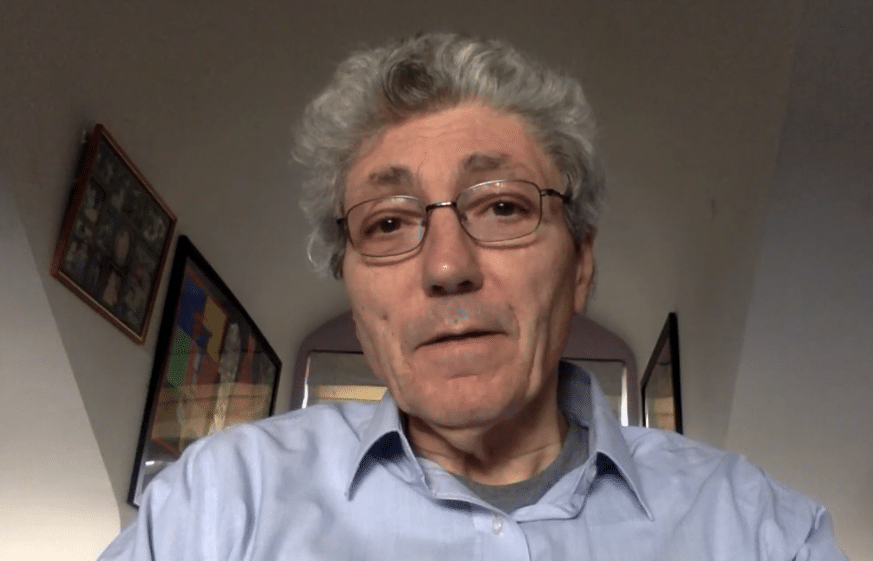
He began doing stand-up comedy about his illness in 2017. When you first read it, the sentence “stand-up comedy about Parkinson’s disease” doesn’t make sense. However, Mayhew-Archer had always been aware of the connection between suffering and laughter and the ways in which humor can transcend serious discourse.
He performed his one-man show Incurable Optimist at the Edinburgh Fringe Festival in 2018. There’s a sense that few people would have the courage to describe that experience—a man with a progressive illness, holding an audience in a small, sweaty venue in Scotland. Most would find a more subdued way to deal.
Parkinson’s disease does not have a single symptom. Outsiders often underestimate that. Tremors are only the symptoms that people are familiar with from television; there are more than fifty documented symptoms. Rigidity, exhaustion, altered speech patterns, and a gradual loss of the physical comfort that most people take for granted are all part of the reality. The ramifications are more than just inconvenient for a writer and performer. They are fundamental to who you are and how you operate.
In the years following his diagnosis, Mayhew-Archer has developed what amounts to a second career around the illness. He started supporting Cure Parkinson’s, made a charity appeal on BBC Radio 4, and raised money with the kind of slightly ridiculous flair—a pasta-eating challenge with his young grandson, which the grandson reportedly won—that sounds unmistakably like the work of a comedy writer.
For his services to individuals with cancer and Parkinson’s disease, he received an MBE in 2020, which was picked up in person at Windsor Castle in late 2021. It’s still unclear if he thought the moment was humorous, poignant, or both. Most likely both.
He has been one of six co-presenters of Movers and Shakers, a podcast about living with Parkinson’s disease that was recorded in a Notting Hill pub in March 2023. Rory Cellan-Jones, Mark Mardell, Jeremy Paxman, and other former BBC personalities who are dealing with the same illness are among his fellow presenters. The UK Broadcasting Press Guild awarded it Podcast of the Year in March 2024. Perhaps the best way to gauge the show’s quality is to look at its fan base outside of the Parkinson’s community.
But When We Dance, a romantic comedy drama about two Parkinson’s patients who fall in love at a dance class, is a film that Mayhew-Archer announced he was working on for the BBC in January 2025. He claimed to have been working on it for five or six years, and as his condition worsened, each draft had become a little more serious.
Admitting in public that the work is tracking the illness and that the two have become entangled in a way he didn’t intend is a startling admission. He had received deep brain stimulation treatment, which involves implanting electrodes in the brain to help manage Parkinson’s symptoms, a year before making that announcement. He called it “extraordinary.”
It’s difficult to ignore how persistently Mayhew-Archer defies the gravity that such an illness usually imposes on those around it. He once told an interviewer that he was “quite glad” he had Parkinson’s—not because the illness is anything but cruel, but rather because confronting it with humor had given him something he might not have discovered otherwise. There’s a feeling that he knows exactly how that sounds and that he means it.
Inspired in part by his father’s diagnosis, his son Simon Mayhew-Archer wrote a comedy series for television. In this family, illness becomes material. That could be a true philosophy or a coping strategy. Maybe it’s both. The 73-year-old Paul Mayhew-Archer still writes, performs, podcasts, and seems to lose pasta-eating competitions to his grandchildren. The disease worsens. He does as well.
FAQs
1. What illness does Paul Mayhew-Archer have?
He was diagnosed with Parkinson’s disease in 2011.
2. How has Paul Mayhew-Archer responded to his Parkinson’s diagnosis?
He turned it into comedy, performing stand-up and raising awareness publicly.
3. What treatment has Paul Mayhew-Archer undergone for Parkinson’s?
He had deep brain stimulation surgery, which he described as extraordinary.
4. What award did Paul Mayhew-Archer receive for his Parkinson’s work?
He was appointed MBE in 2020 for services to people with Parkinson’s.
5. What BBC project is Paul Mayhew-Archer currently developing about Parkinson’s?
A romantic comedy film called But When We Dance, commissioned by the BBC.