
Some celebrity weight loss stories seem real, while others seem like PR gimmicks. Jason Manford’s clearly fits into the first category, which is why it merits consideration. Fans have been wondering why the 44-year-old comedian, who was born in Manchester, has been noticeably thinner for months. When he finally responded, it was refreshingly unglamorous: padel tennis and a group of fathers who encouraged one another to keep going.
Here, it’s difficult to ignore the timing. Weight loss jabs from Ozempic, Wegovy, and their cousins have become somewhat of an open secret in British celebrity culture. They have created whole magazine cover cycles and transformed red carpet appearances. To his credit, Manford tackled the issue head-on, stating unequivocally that his metamorphosis was unrelated to pharmaceutical shortcuts. Audiences who have secretly wondered about the true story behind a famous face losing weight quickly tend to react differently to that kind of unprompted, targeted transparency.
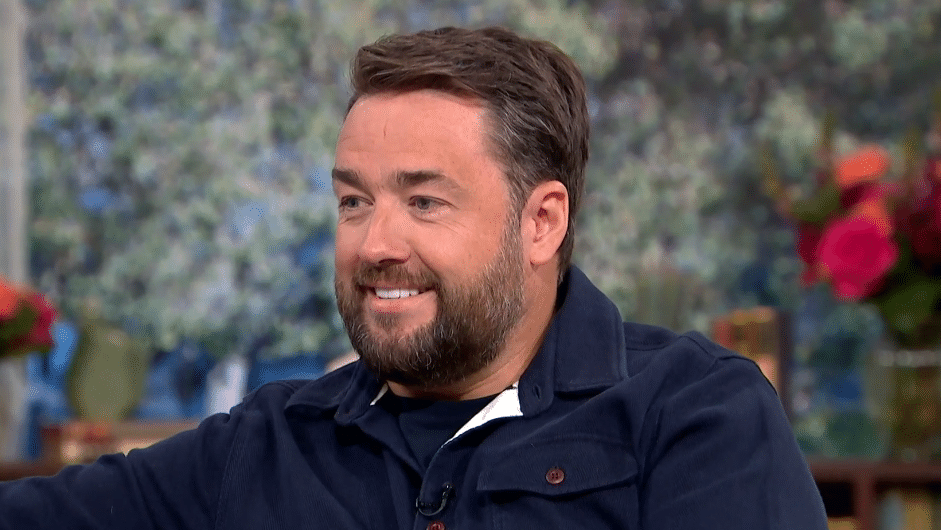
It turns out that a doctor’s visit that unnerved him more than he anticipated was the catalyst. He described his knees as being in constant pain, and a surgeon made it clear to him that he would need knee replacement surgery if he didn’t lose weight. Hearing that in your early forties is sobering, especially if you’re a father of six and have a successful touring career.
There’s a feeling that this was a sincere attempt to address the physical consequences of being overweight for an extended period of time rather than a vanity project. Fear can sometimes be a stronger motivator than ambition, and this appears to have been the case for Manford.
What came next was a dedication to padel tennis, a rapidly expanding sport that falls somewhere between squash and tennis. It is played on a glass-walled, enclosed court and calls for the kind of quick lateral movement that burns calories without feeling like punishment. For anyone who has discovered a sport that doesn’t feel like exercise until you’re suddenly exhausted and inexplicably wanting more, Manford’s description of becoming “obsessed” with it sounds about right.
Together with other fathers from his social circle, he formed a fitness group, and it seems that this group accountability was just as significant as the sport itself. It turns out that consistency and community are still more important than any one fitness tip.
He has also admitted that he had advantages that many others do not, which is something that is simple to ignore in these tales. It’s not insignificant to have access to a personal trainer, a nutritionist, and schedule flexibility to put his health first. He gave them names, to his credit. His accomplishments are not diminished by such candor; rather, it contextualizes them in a way that is actually more beneficial than the typical inspirational framing surrounding celebrity body transformations.
By all standards, three stone in eighteen months is significant progress. The results seem to have stuck because it’s not dramatic crash-diet territory. In May 2026, he appeared on ITV’s Lorraine, looking genuinely well instead of drastically different—the kind of change that is perceived as health rather than spectacle.
That day, co-star Marisha Wallace joined him to talk about their upcoming musical tour, Something Rotten!, and the conversation felt remarkably casual—someone at ease in their body discussing work they’re enthusiastic about, as opposed to someone acting out a transformation story for the cameras.
At least in part, Manford’s story illustrates a larger cultural dialog about sustainable change. There is still a desire for quick fixes, such as injections, extreme programs, and dramatic before-and-after narratives. However, there’s also a growing weariness with all of that, a silent craving for tales that seem more authentic, like a doctor’s warning, a sport that proved to be genuinely enjoyable, or a group of friends who regularly showed up on a court. In any case, that might be the more helpful narrative. It’s more replicable, not because it’s more moral.
He continues to tour, perform, and engage in the activities that have shaped his career. The context of his life is more important than the weight loss. And that may be the most subtly comforting aspect of it.
FAQs
1. How much weight did Jason Manford lose?
He lost approximately three stone over eighteen months.
2. What sport helped Jason Manford lose weight?
Padel tennis became his primary method of staying active and fit.
3. Did Jason Manford use weight loss injections like Ozempic?
No — he confirmed his results came entirely from lifestyle changes.
4. What motivated Jason Manford to start his weight loss journey?
His doctor warned him he faced knee replacement surgery if he didn’t slim down.
5. Did Jason Manford have professional help during his weight loss?
Yes, he worked with both a personal trainer and a nutritionist.