
In the dead of winter, a certain kind of fear descends upon new parents: the baby’s inability to breathe well enough to attempt feeding, the shallow, labored breathing, the chest drawing in sharply with each breath. For decades, the only real medical solution to that fear was a hospital bed, extra oxygen, and waiting. Tens of thousands of infants are admitted to hospital wards each year due to the respiratory syncytial virus, or RSV, and for the most part, there is little that can be done to stop it.
That image has begun to change. A vaccine administered during pregnancy is quietly showing results that most pediatricians would have considered remarkable even five years ago, without quite the fanfare it arguably deserves. When administered at least four weeks before delivery, the maternal RSV vaccine reduced serious hospitalizations among newborns by nearly 85%, according to data released in April 2025 by the UK Health Security Agency and based on nearly 300,000 births throughout England. That’s not even a slight improvement. A problem that has occupied pediatric wards every winter for generations has been almost eliminated.
| Field | Detail |
|---|---|
| Vaccine name (NHS) | Abrysvo (RSVpreF bivalent vaccine by Pfizer) |
| Developed by | Pfizer Inc. |
| Approved/licensed by | FDA (USA), MHRA (UK), EMA (EU) |
| Target virus | Respiratory Syncytial Virus (RSV) |
| Who it’s for | Pregnant women (from 28 weeks), adults 75+, care home residents; adults 50–74 at increased risk (per CDC) |
| Recommended timing (pregnancy) | 28–36 weeks gestation; ideally ≥4 weeks before birth |
| Doses required | Single dose for adults; given with each pregnancy |
| Efficacy (maternal) | ~85% reduction in severe RSV hospitalisations in newborns (UKHSA, 2025) |
| How it works | Boosts maternal antibodies passed to baby via placenta; protects infant from birth |
| UK programme launched | 2024 (NHS England) |
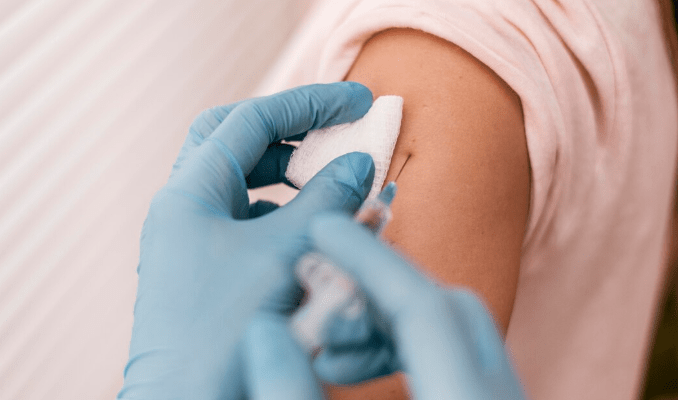
| Administration route | Injection into the upper arm |
| Cost to patient (NHS/NIP) | Free |
| Reference / official source | NHS — RSV Vaccine |
One of those viruses that most adults hardly notice is RSV. It passes after causing a runny nose and possibly a cough. However, the same virus can cause bronchiolitis in newborns, especially during the first six months of life. This inflammation of the lung’s tiny airways can worsen frighteningly quickly. It affects half of all newborns. Every year, over 20,000 people become gravely ill in UK hospitals. Few people pass away. Dr. Conall Watson, who oversees the UKHSA’s national RSV program, gave a straightforward explanation of what a serious infection looks like. He said, “You can see the lungs and chest struggling.” Parents are terrified when they witness that, and for good reason.
The Pfizer vaccine Abrysvo functions via a mechanism that is elegant in its simplicity. When a pregnant woman receives the jab from 28 weeks onward, her immune system mounts a response. The baby receives the antibodies produced by the response after they pass through the placenta. A certain level of protection is already present when the child takes its first breath. Neither a neonatal injection nor the need to wait for the baby’s immune system to develop is necessary. In the last weeks of pregnancy, the mother transfers the protection before the baby is born.
In 2024, the UK launched this program after clinical trials demonstrated that regulators acted reasonably quickly. Pregnant women can now get the vaccine for free from the NHS starting at 28 weeks, usually around the time of their regular prenatal appointment. Guidelines advise getting the shot as soon as possible after 28 weeks. However, there is a useful piece of information hidden in the data that is important: even a two-week interval between vaccination and delivery seems to provide some significant protection. Even being late is not pointless.
It’s difficult to ignore the fact that this story hasn’t gotten nearly as much attention as one might anticipate considering its scope. Every winter, tens of thousands of kids are spared life-threatening illness, which is an important public health accomplishment. The side effects are mild and transient, and the vaccine is simple—it is a single injection that is compatible with the flu and whooping cough vaccines that are already regularly administered during pregnancy. swelling where the injection was made. A headache occasionally. These are not contentious issues. Even so, uptake is still far from universal.
The fact that RSV is not as well-known as other respiratory viruses could be a contributing factor. Flu clearly kills people, as evidenced by news reports. The world was changed by COVID-19. Instead of making headlines in newspapers, RSV is a silent emergency that occurs in pediatric wards. The majority of parents who haven’t experienced a difficult RSV winter with a newborn don’t fully comprehend what it looks like up close. Those who have tend to remember it.
In the UK, the recommendation currently applies to people who are 75 years of age or older, pregnant women, and residents of assisted living facilities. All adults over 75 and those between the ages of 50 and 74 who are at increased risk for serious illness are advised to get the vaccine in the United States by the CDC. This group includes those who have long-term lung conditions like COPD, where an RSV infection can worsen already compromised respiratory systems. Observing how the guidelines change in various nations gives the impression that the coverage is gradually expanding and the science is solidifying.
It’s still unclear if the results of England’s first comprehensive maternal vaccination program will lead to a quicker rollout elsewhere. The study tracked births during a single respiratory season, from September 2024 to March 2025. This data set is significant but not definitive. It provides evidence from the real world rather than just trial conditions. Included were almost 90% of all births in England during that time. The figures held. That is more important than it may appear. The UKHSA reported what happens when a national program is actually conducted through regular clinics with typical variation in timing, uptake, and gestational age. Vaccine trials are designed for ideal conditions.
A medical intervention that takes effect before a person even exists outside the womb has a subtle significance. The infant under protection has not yet been born. The defense is ready and waiting. That is worth stating clearly for a virus that has cost so many families so much: intubated babies, nights spent in resuscitation rooms, and parents unable to hold their kids. This is effective. Obtain a vaccination.